03 Hubbard Art Walls
(Collaborator: Denise Sanchez)
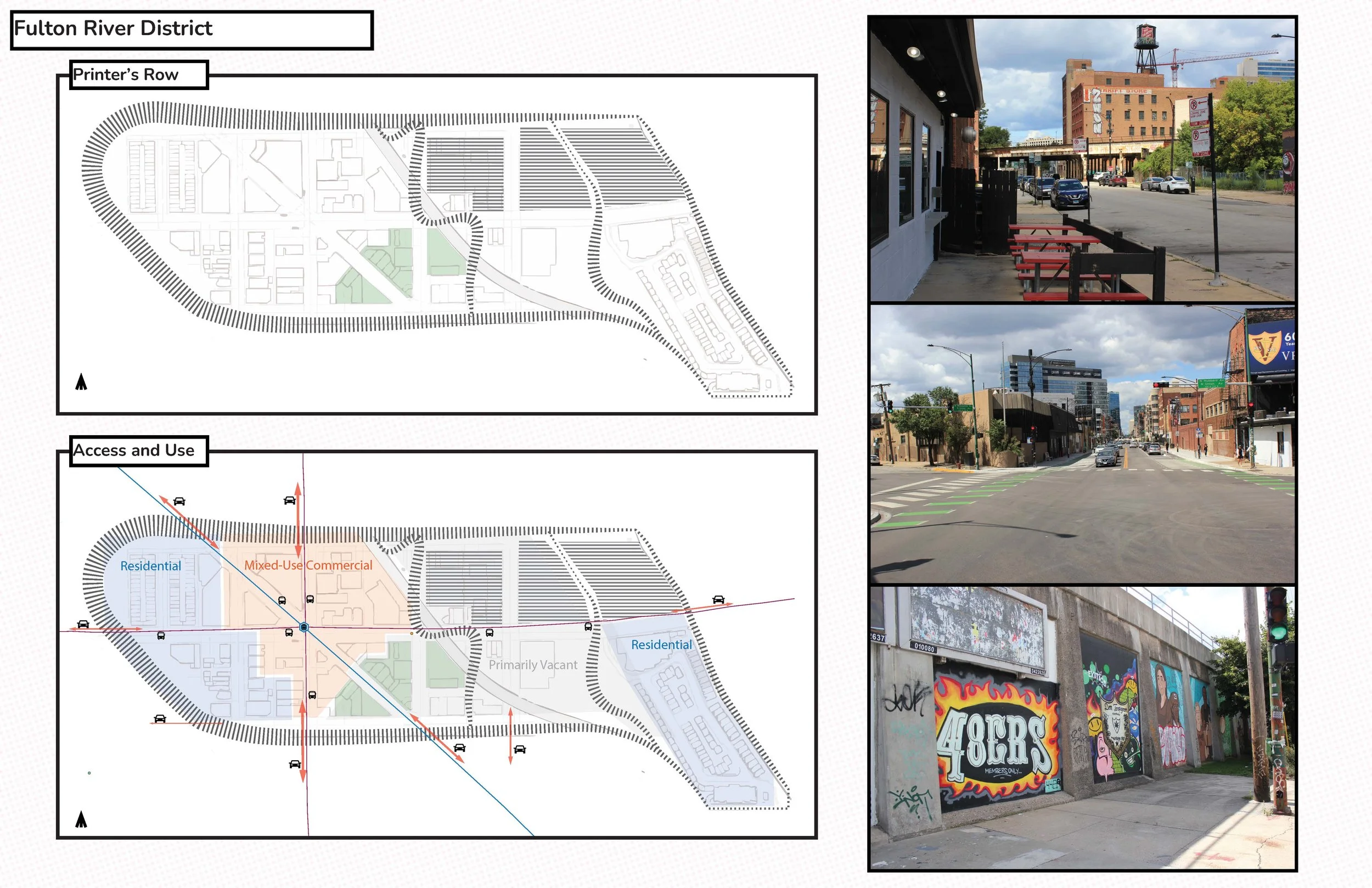
The Fulton River District sits at a pivotal point in the city, positioned between some of Chicago’s most intense urban zones. To the east, the Loop and River North bring high-density commercial and residential development, while to the south and west the Fulton Market District continues that energy with a rapidly growing mix of workplaces, housing, and entertainment.
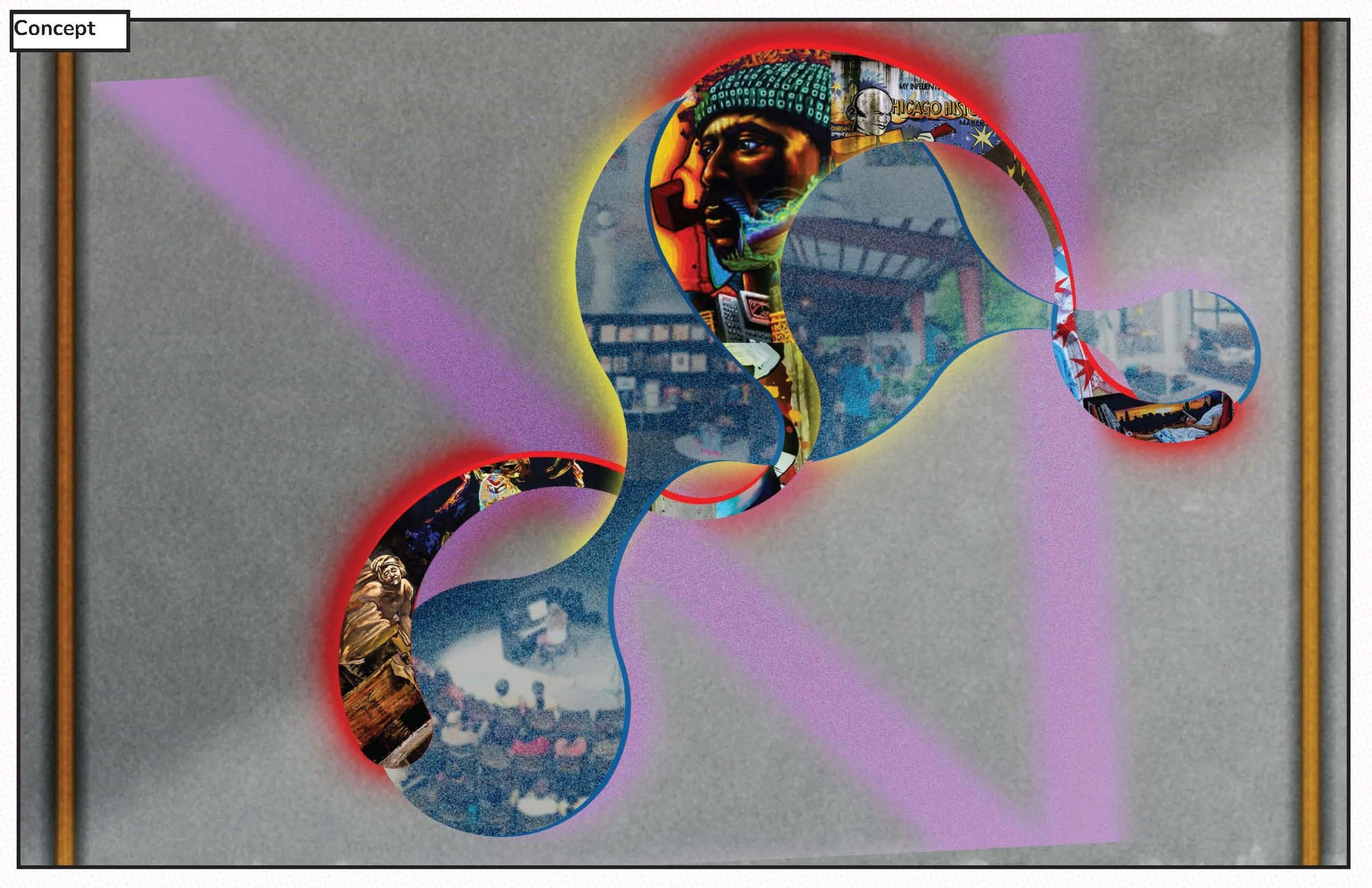
Organized around three programmatic centers, each serving a different role but linked together through a continuous art-focused framework, the project aims to bring culture, commerce, landscape, and new residential density into the district.
A New Arts District
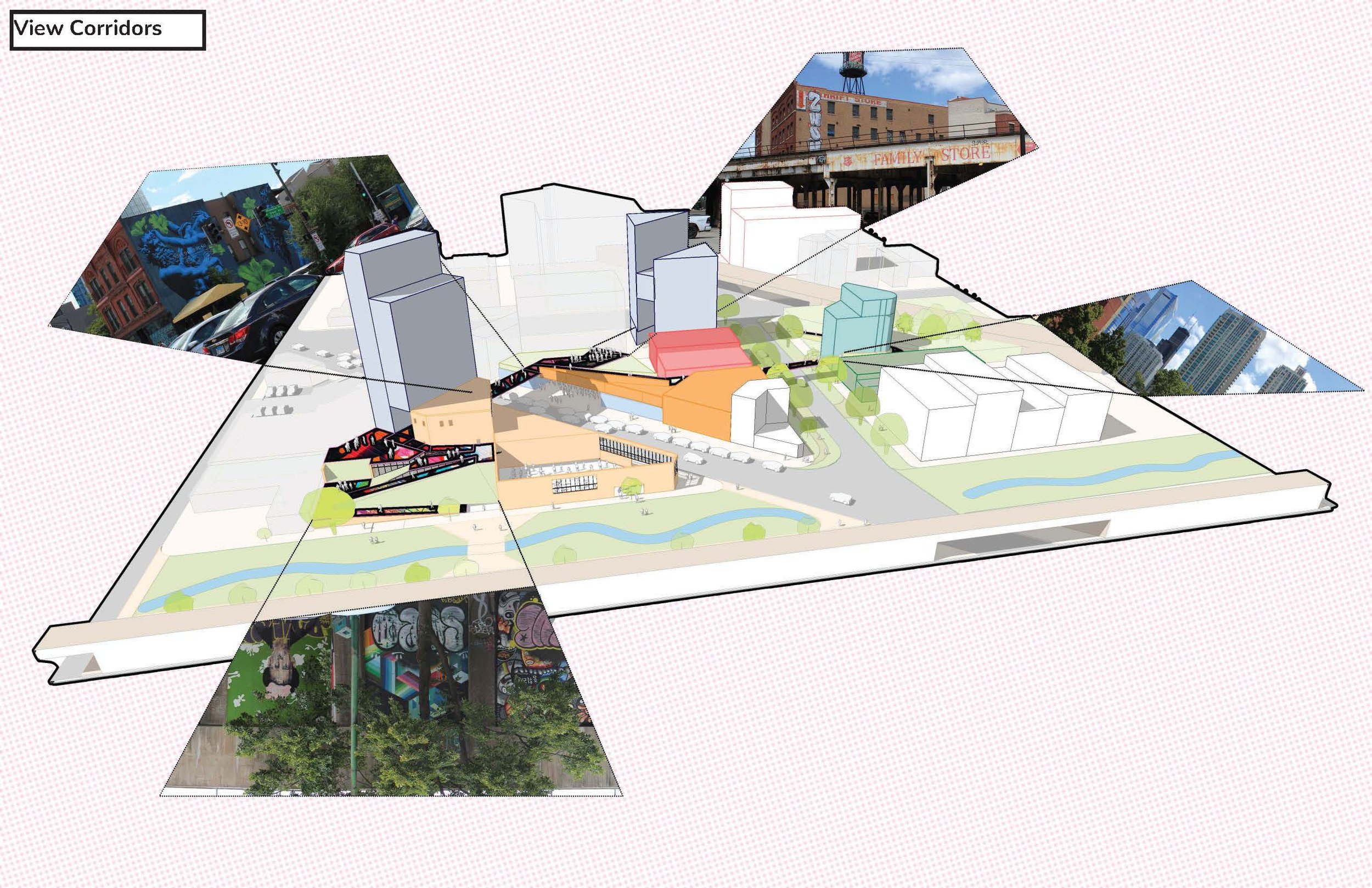
Along this art path, we establish new sightlines that open the district visually and spatially. Key view corridors align toward the Hubbard Street Art Wall, the Halsted–Milwaukee intersection, and the Salvation Army building, helping orient visitors and anchor the path within its context.
Phase 1
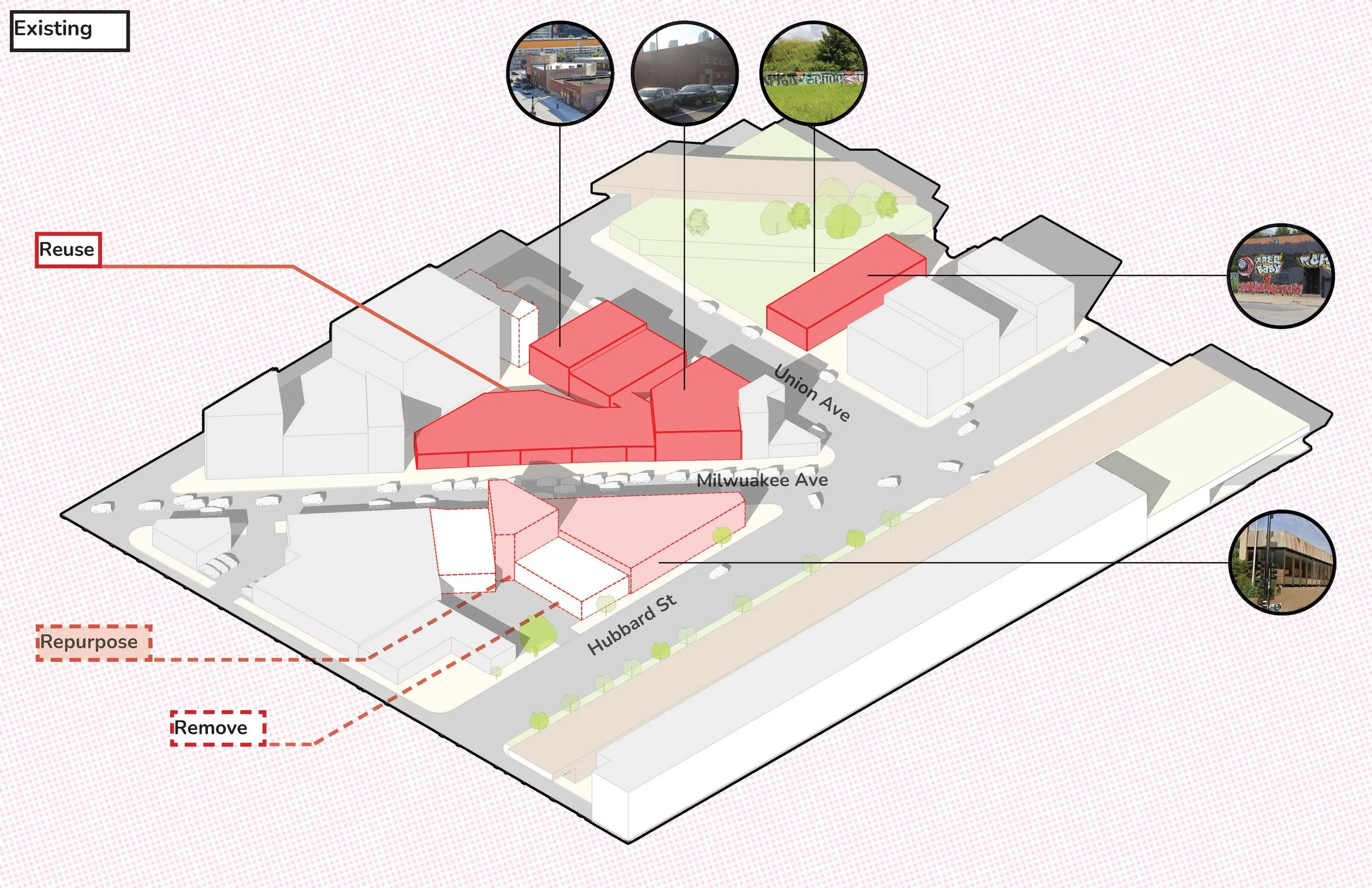
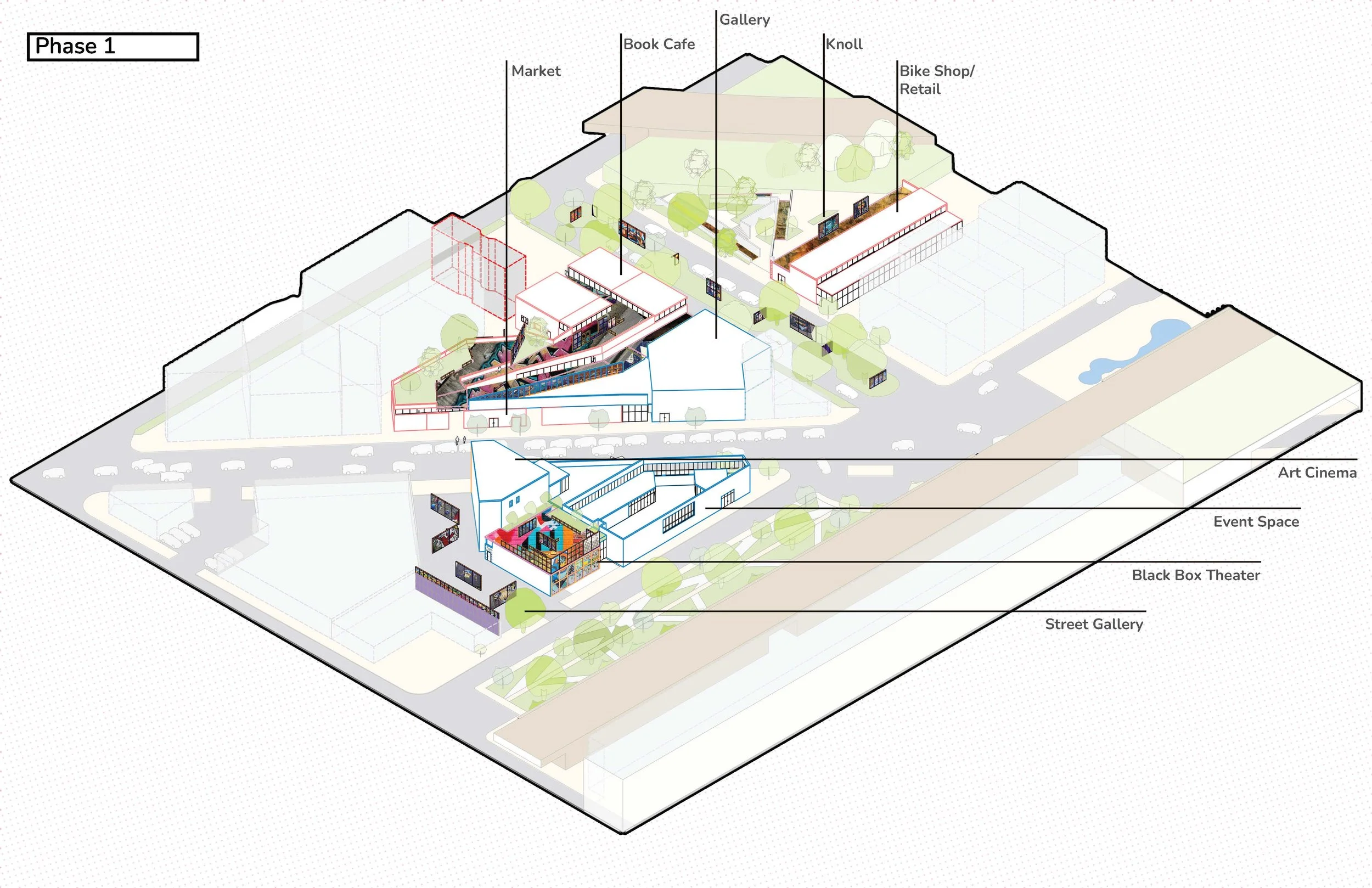
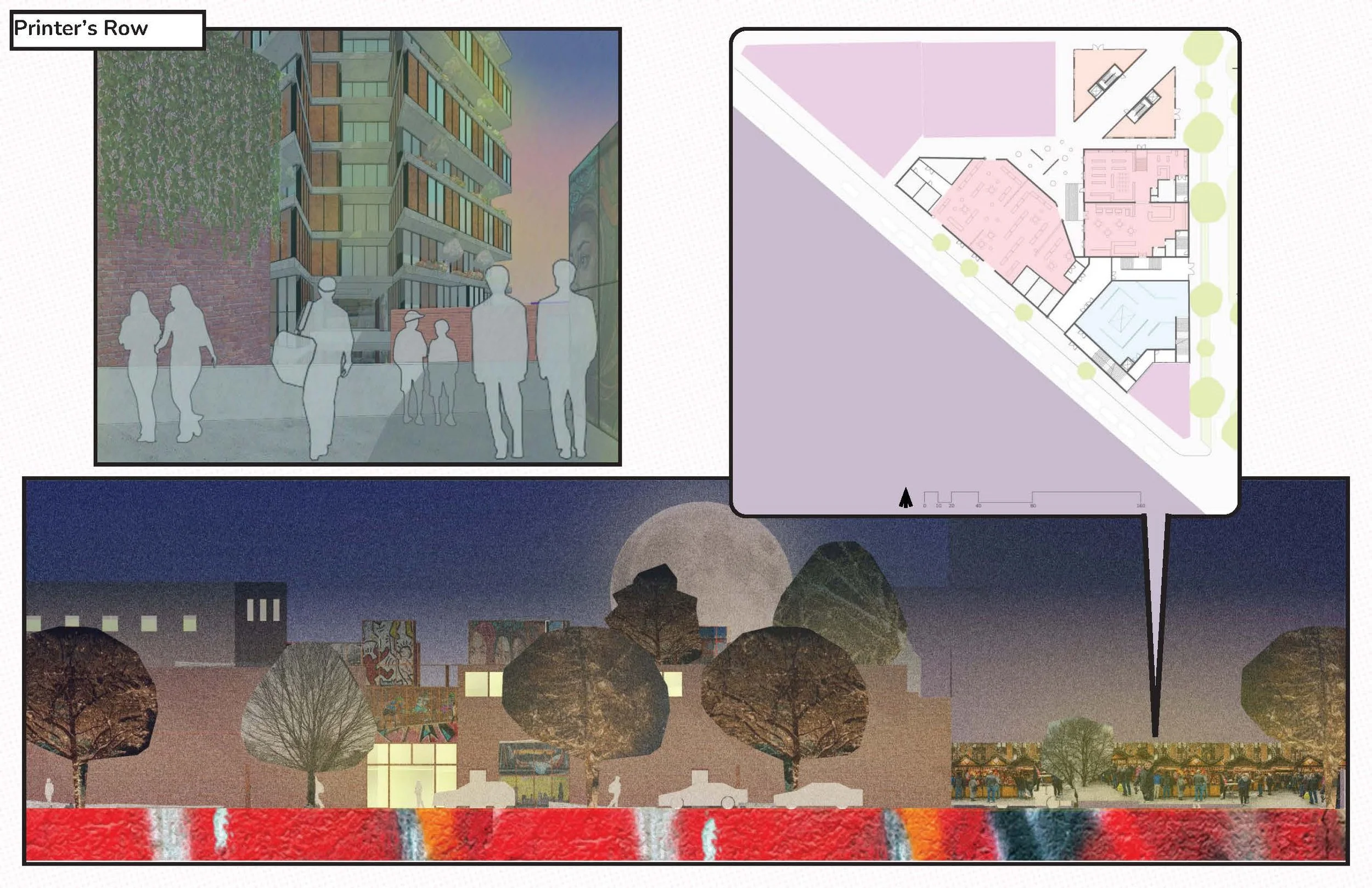
Phase 1 begins with the transformation of existing structures. The U.S. Bank building is selectively demolished, retaining its façade and window mullions to frame an enclosed outdoor event hall that blends memory and openness. The neighboring Print Shop is repurposed into a Gallery and Market, strengthening the local arts scene and supporting the planned Artist Residency nearby.
Phase 2
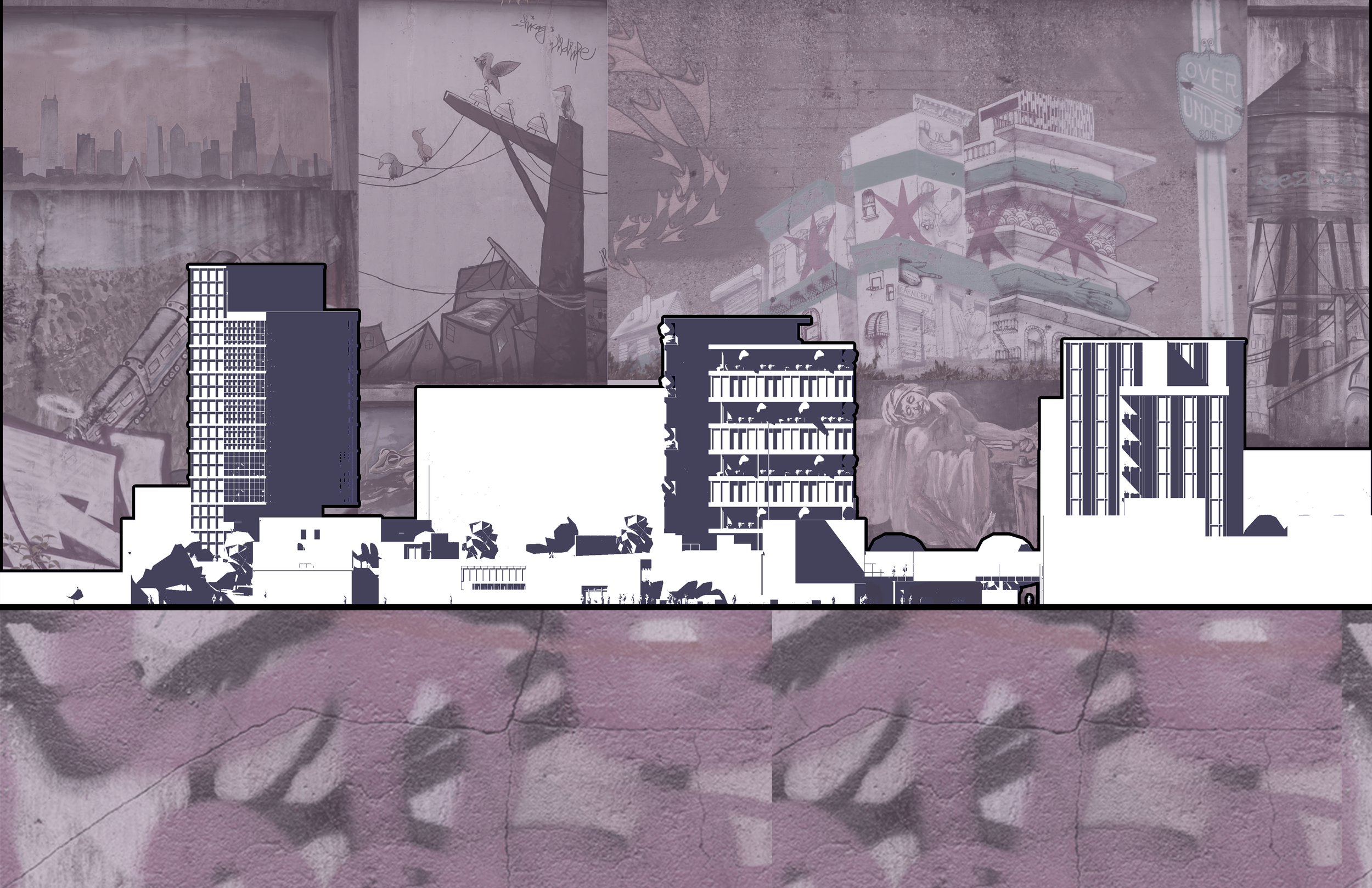
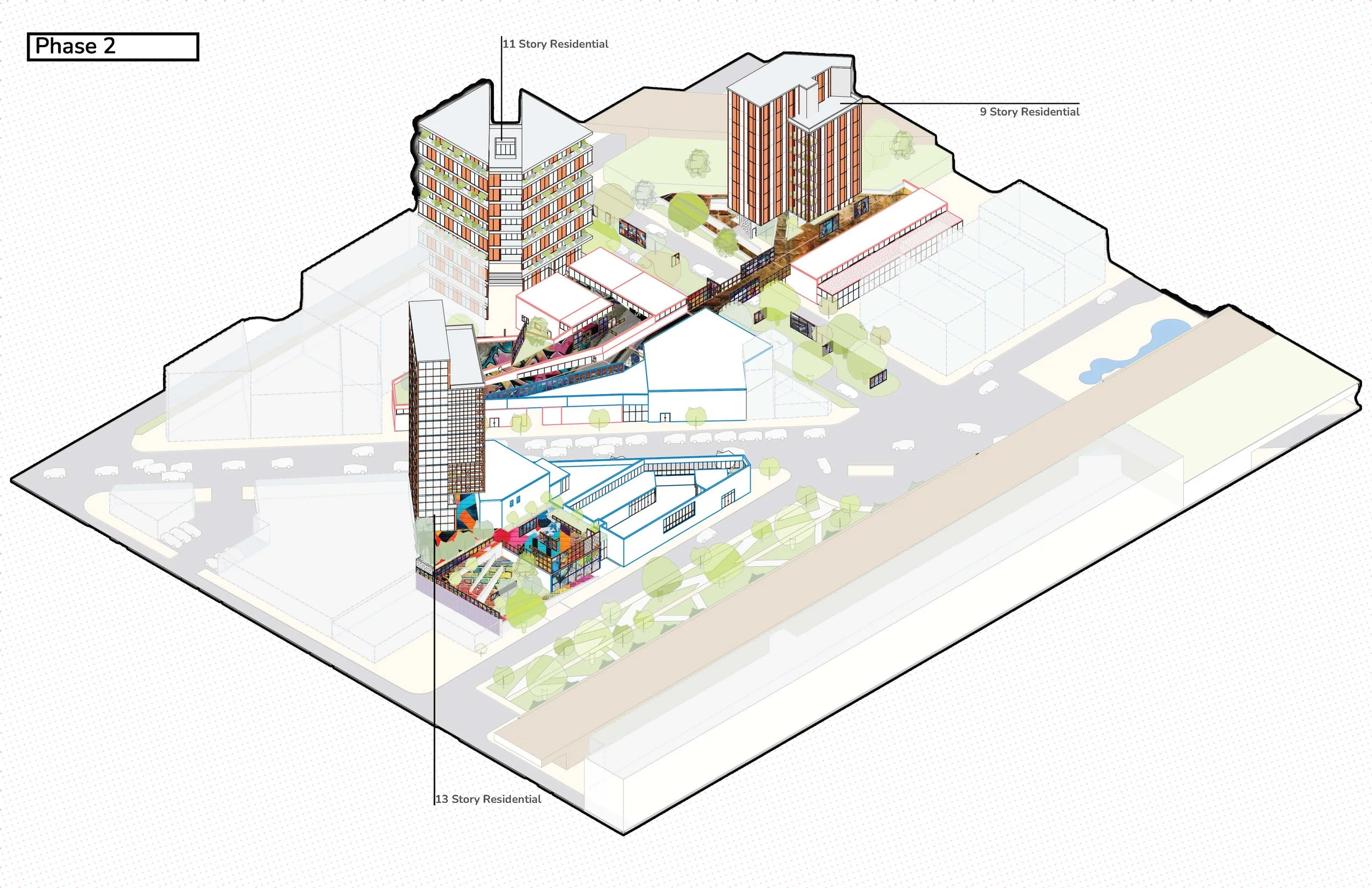
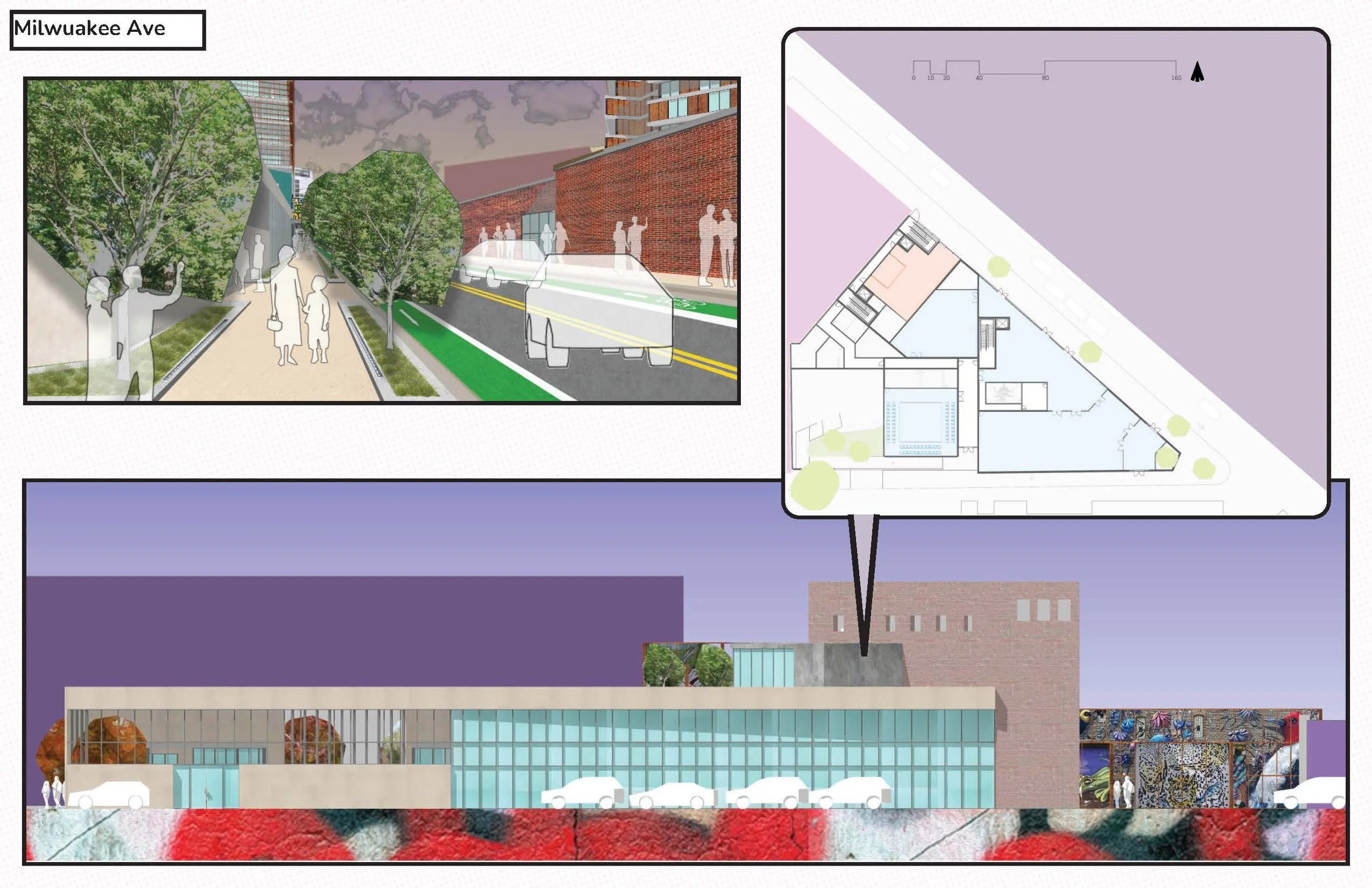
Phase 2 establishes Hubbard Walls as a cultural anchor. Three towers rise from the site, bringing new residents and visitors to sustain the district’s daily life. A new Black Box Theater open onto Milwaukee Avenue, creating a bold public frontage and performance hub. The building’s rear terraces ramp gently down toward Hubbard Street, initiating a site-wide pedestrian bridge that connects Hubbard to Union and Grand.
Levar Hoard Street Gallery
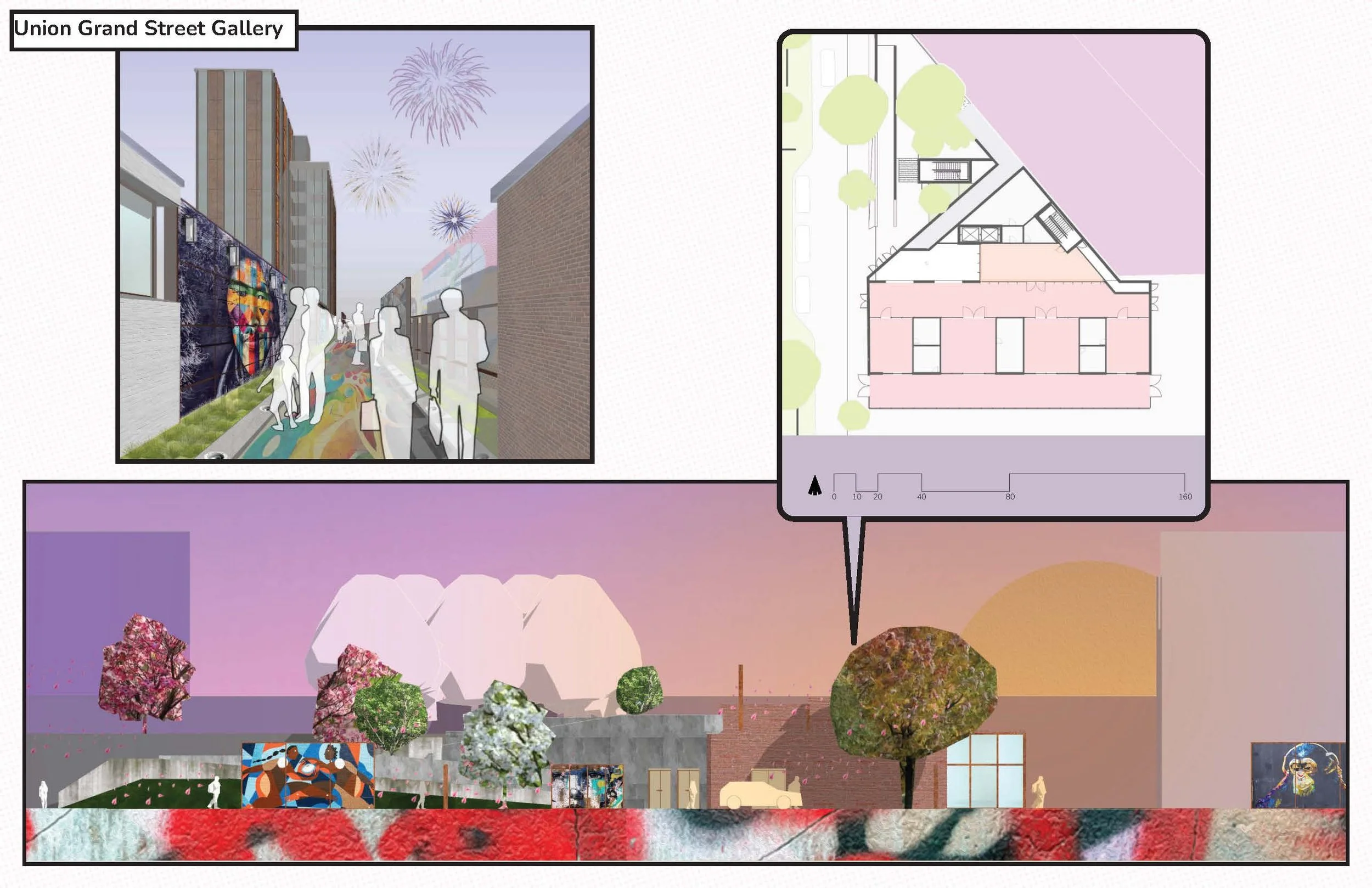
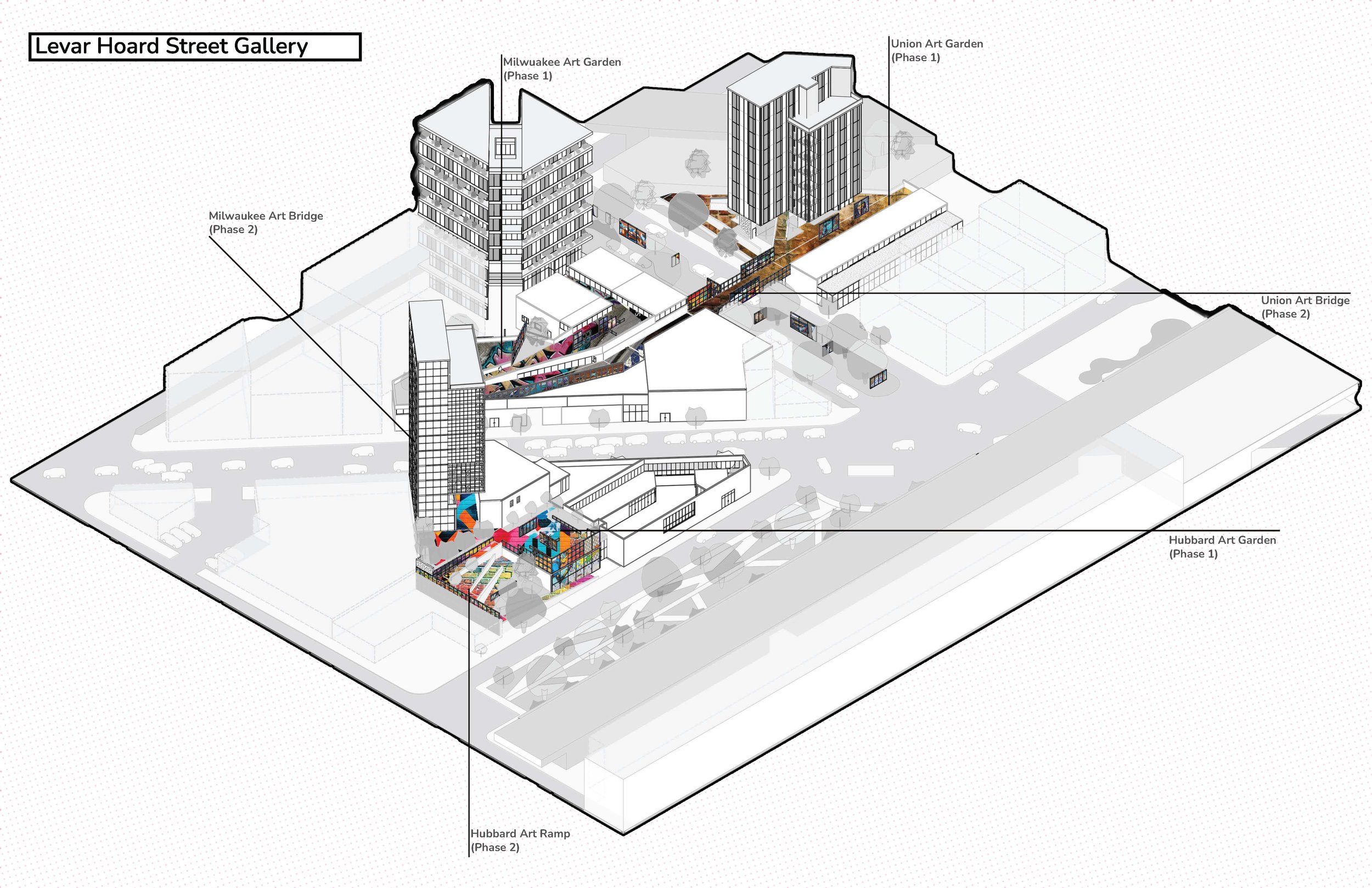
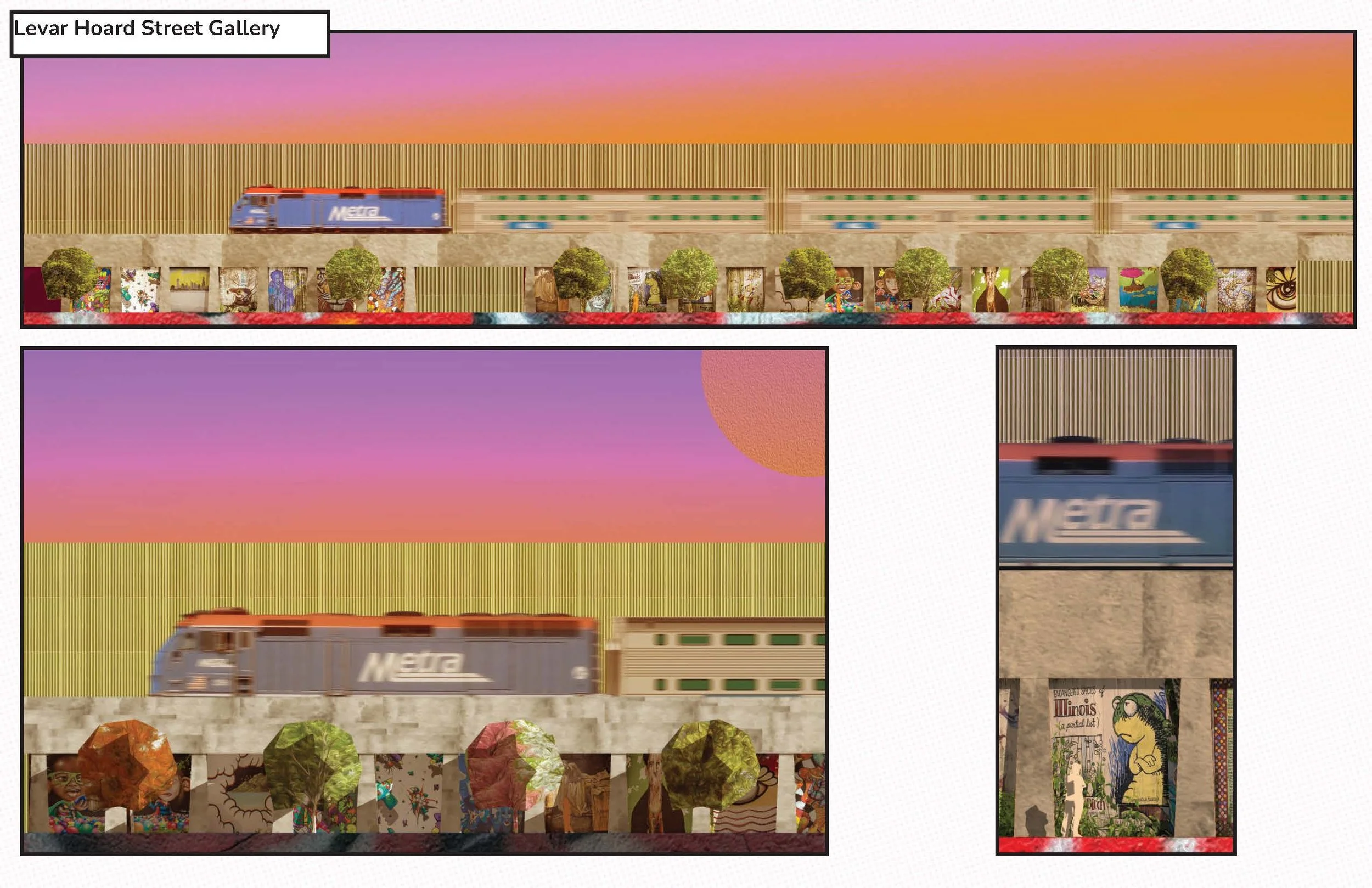
The Levar Hoard Street Gallery—named in honor of the curator of the Hubbard Street Art Wall—extends the creative momentum of Hubbard deeper into the site. An ‘art ramp’ begins at the wall and rises to a bridge that spans Milwaukee Avenue, connecting to the flower and sculpture gardens atop the market roof. From there, the route continues across the Union Art Bridge to the Union Street ramp and park. Along this path, murals and sculptures by local Chicago artists form an open-air gallery that celebrates the city’s creative identity.
Perform
The performance block brings together the event space, art cinema, and black box theater.
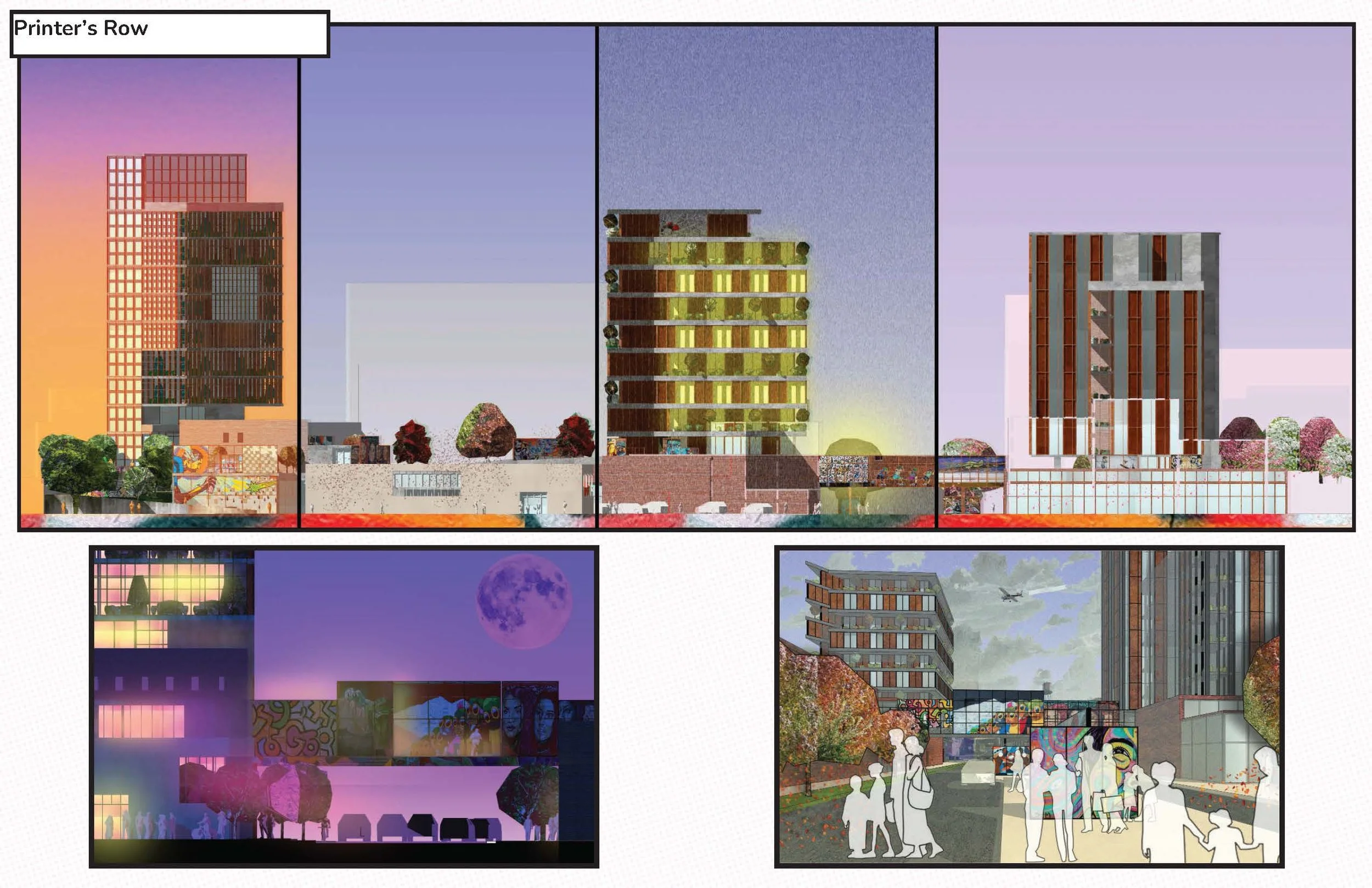
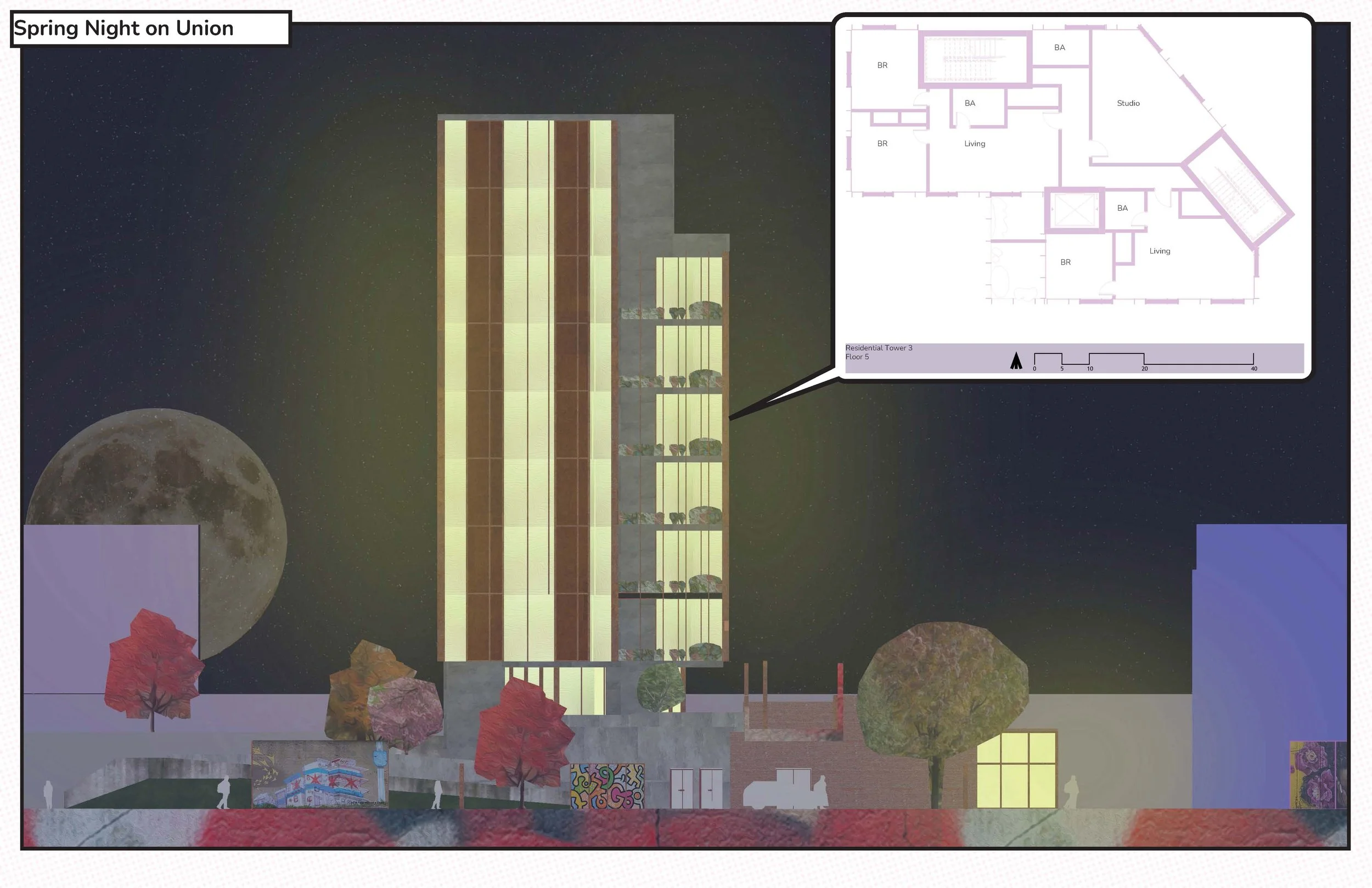
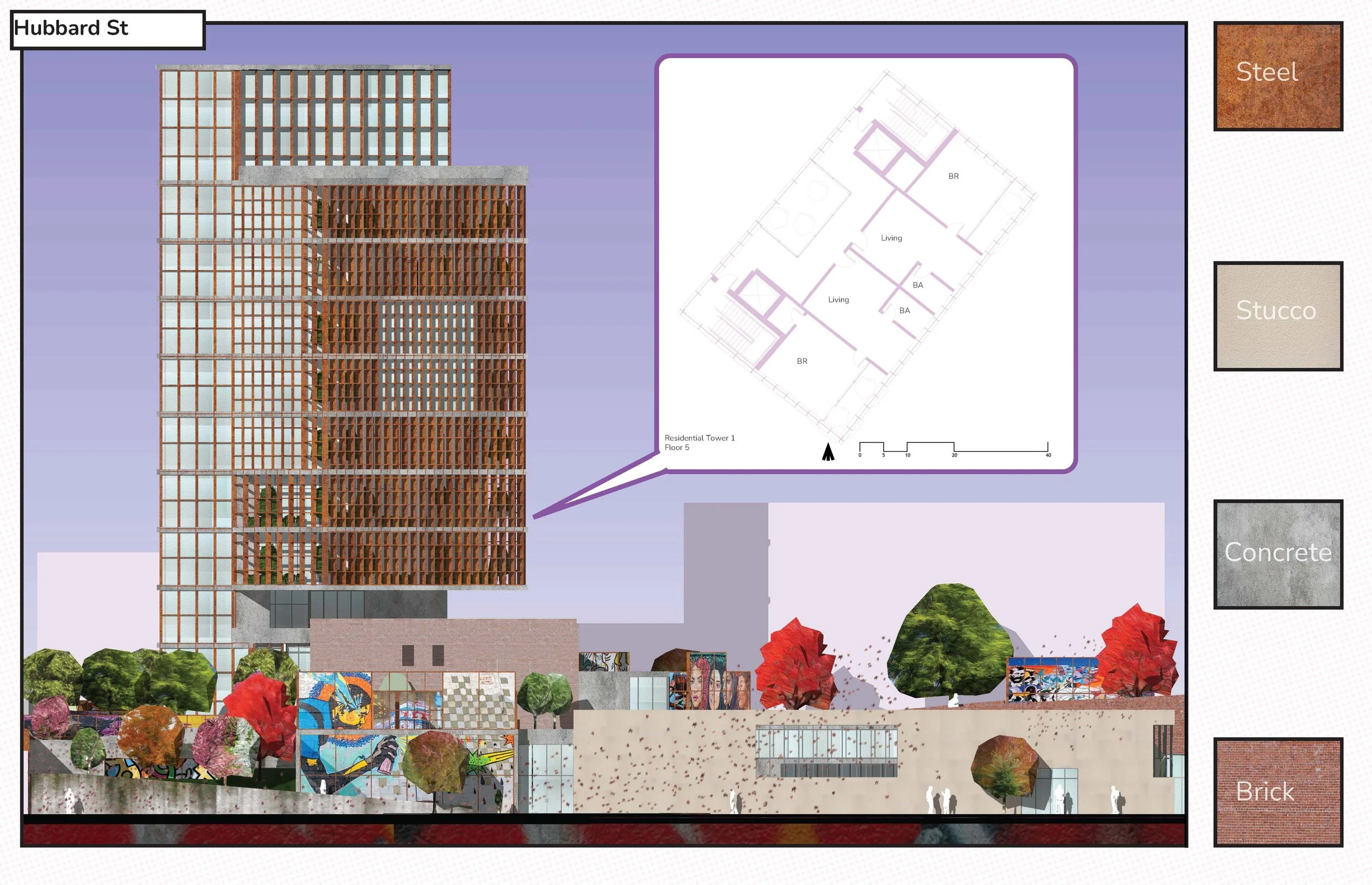
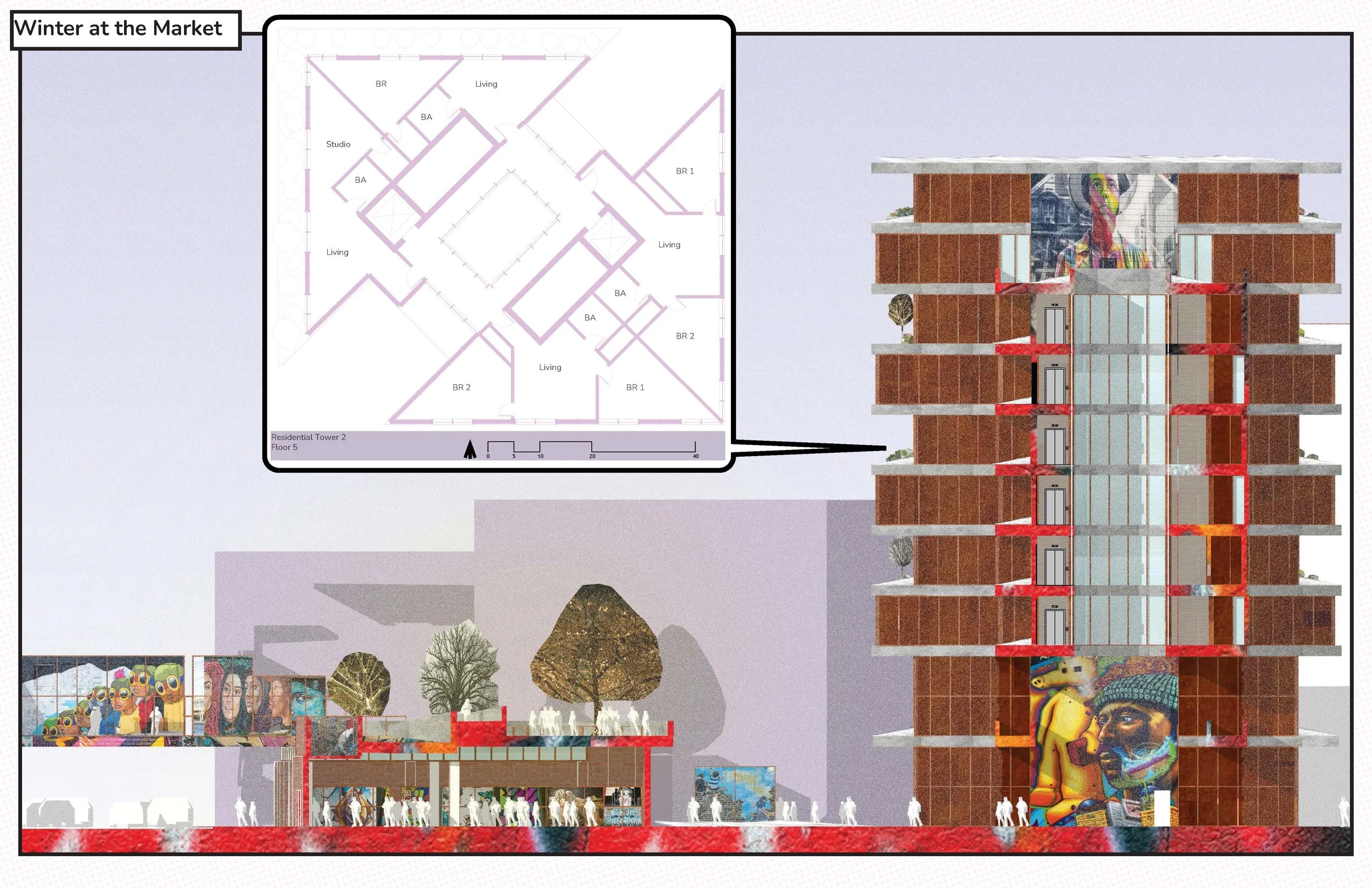
In Phase 2, the 13-story residential tower is introduced, offering studios and one-bedroom units along with a rooftop terrace for residents. Its eggcrate façade is composed of weathered steel mullions that reference the site’s industrial past while also creating shaded transitional spaces between the interior and exterior.
Gather
Gather introduces culture and commerce to the site by converting the former print shop into a combined market and gallery, and transforming the old machine shop into a book café.
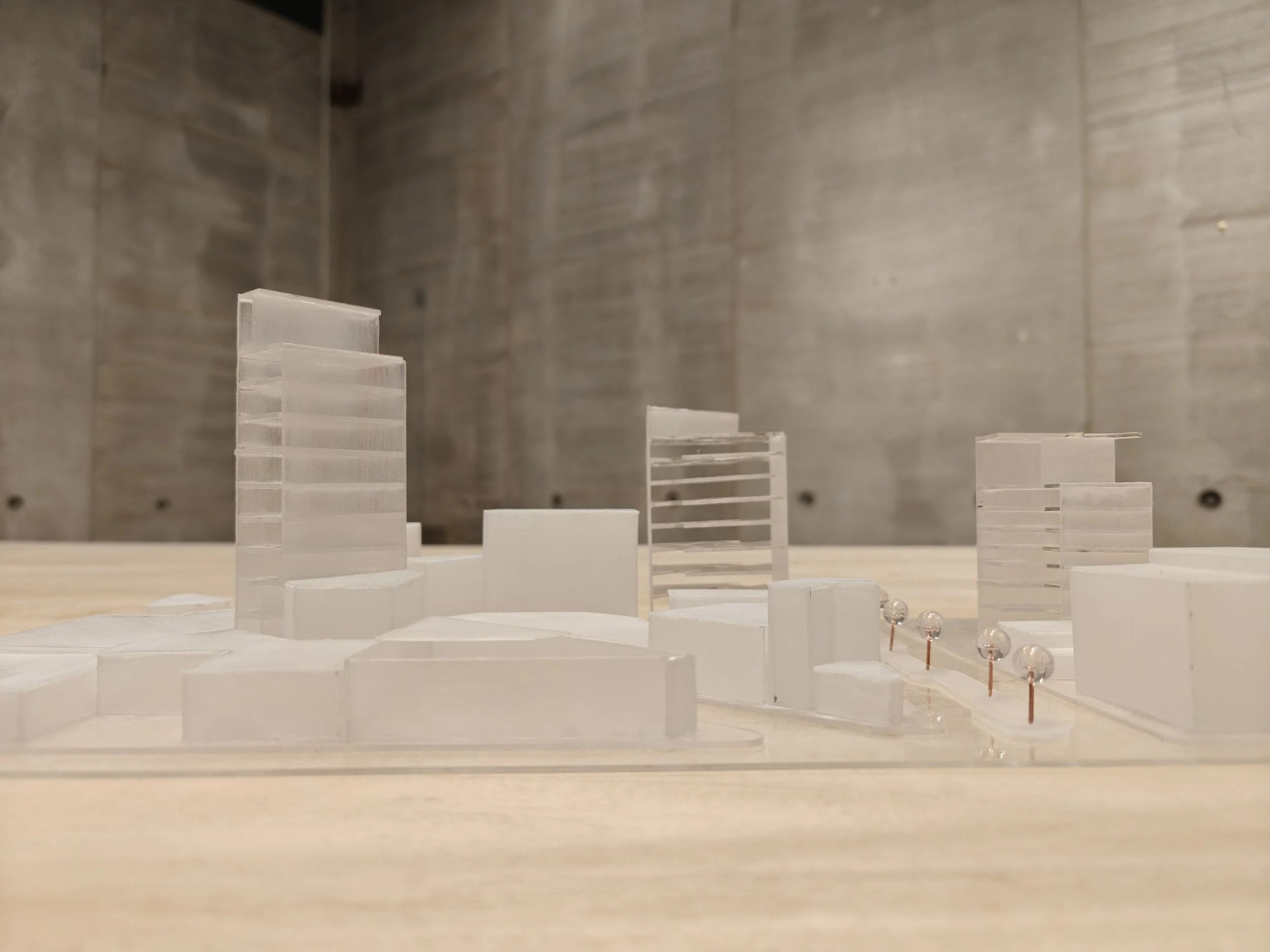
In Phase 2, Gather expands with an 11-story residential tower overlooking the market courtyard. The tower is split into two volumes to preserve a clear view of the Salvation Army building from the flower garden on the Market rooftop.
Active
Active reimagines Union Street as a slower, more pedestrian-oriented corridor. It remains two-way, but parking is reduced to create space for a generous central traffic island. This island becomes an artful public element, hosting mural panels, small installations, and seating that celebrate local creativity while improving safety and walkability.
In Phase 2, a nine-story apartment building rises above the terrace park, adding new housing while reinforcing the stepped public landscape below.