02 Englewood Community Bicycle Center
(Collaborator: Chanyoung (Brandon) Jeong)
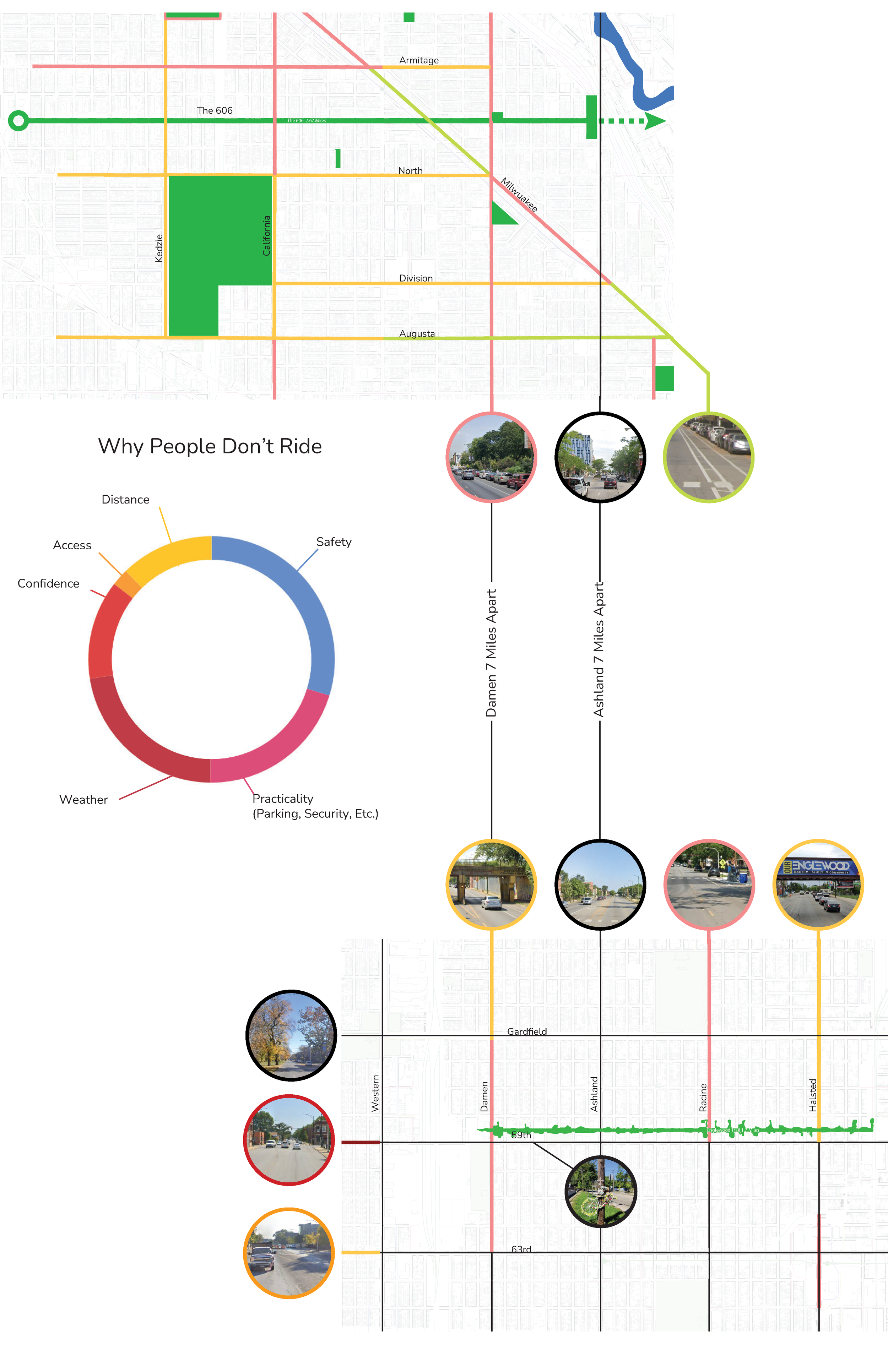
Englewood, Chicago, once a vibrant and bustling neighborhood on the South Side, has faced significant disinvestment over the past several decades. This disinvestment has created challenges for many residents, particularly those without access to cars, who struggle to reach nearby grocery stores, schools, and public institutions. Adding to these challenges, Englewood has only three fragmented bike lanes, limiting safe, accessible transportation options.
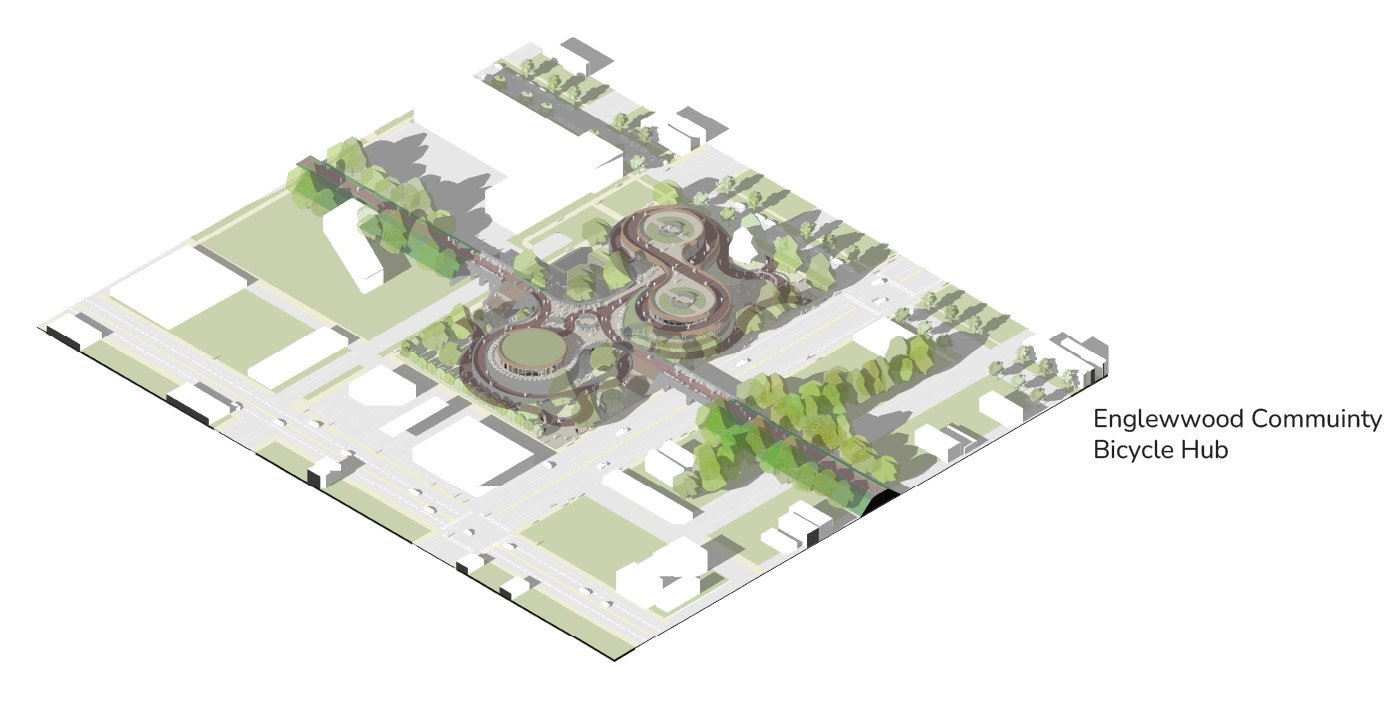
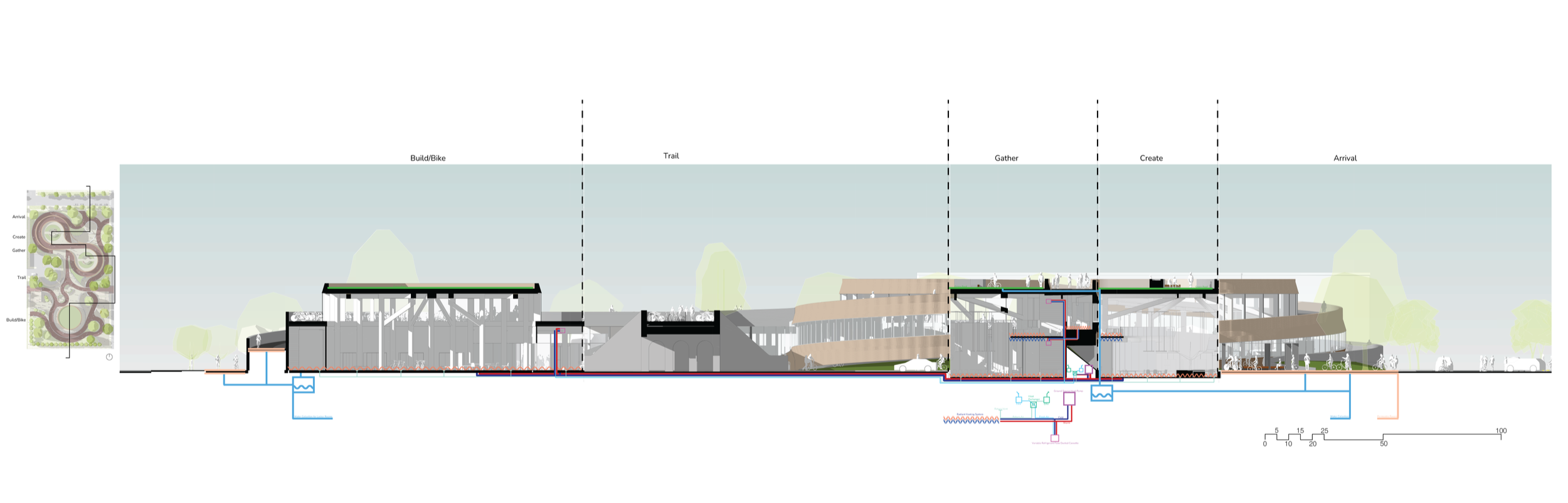
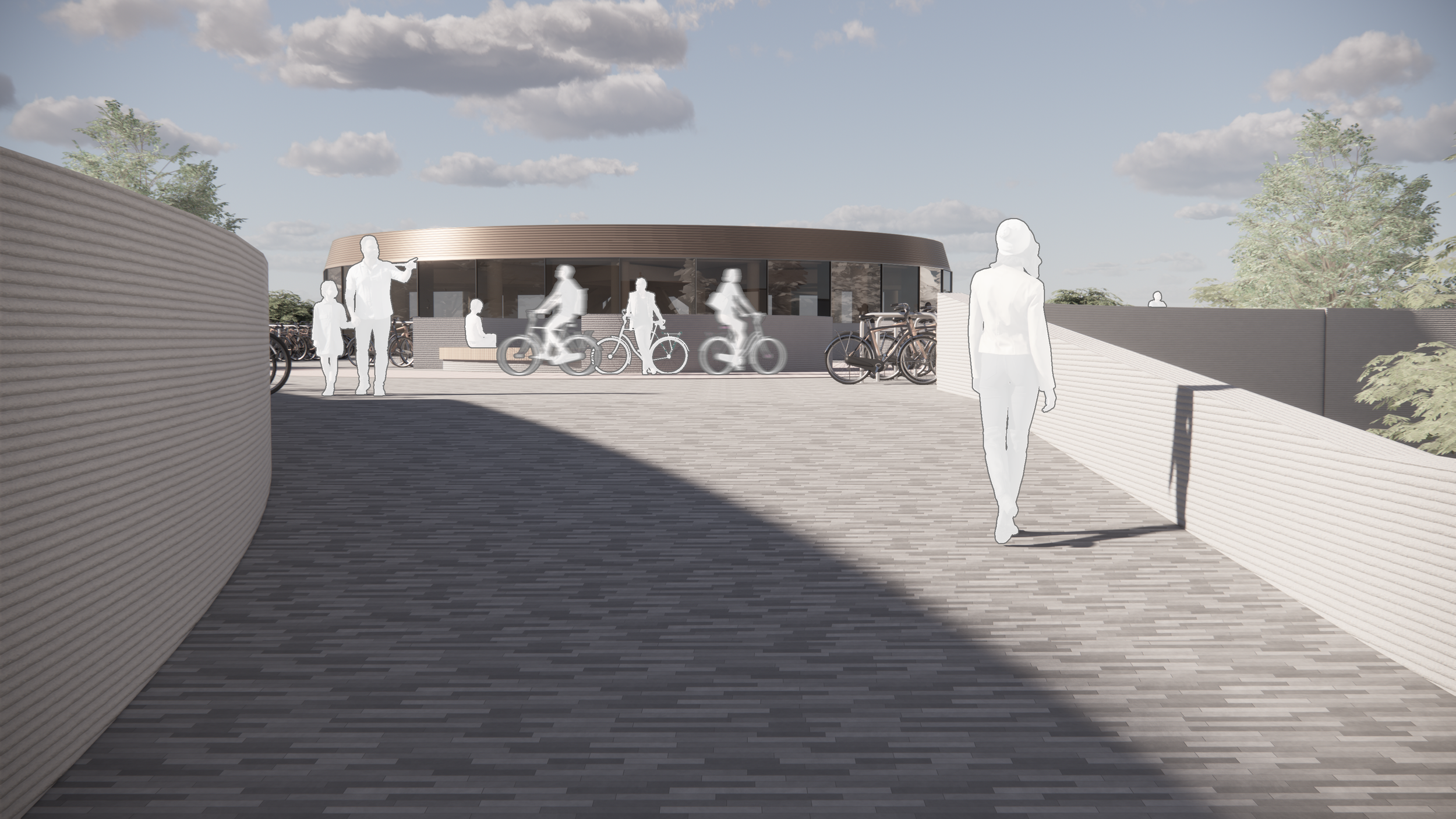
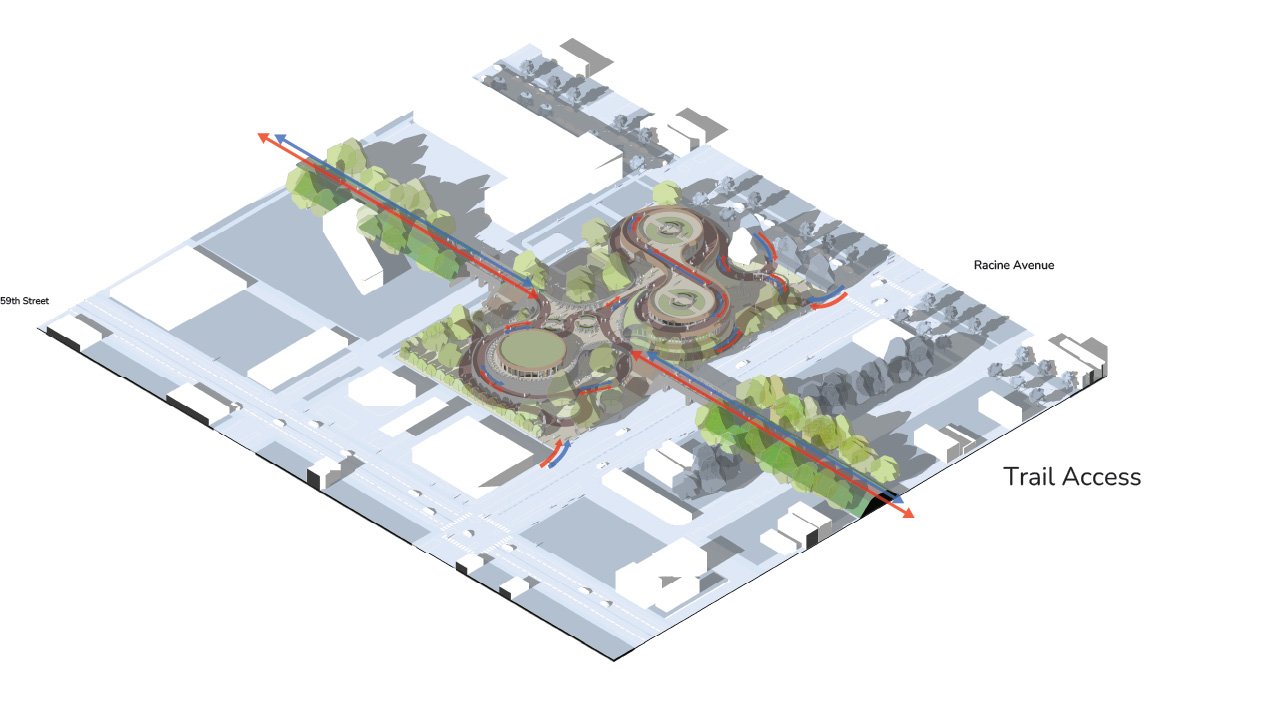
The Englewood Community Bike Hub aims to address these issues by supporting the use of bicycles and promoting healthy, active lifestyles. Strategically located at the heart of the proposed Englewood Trail, the Bike Stop envisions the trail as a “pedestrian highway” that enhances connectivity across the neighborhood. By bridging gaps in transportation infrastructure, the project seeks to foster greater mobility, equity, and community engagement.
The Bike Hub
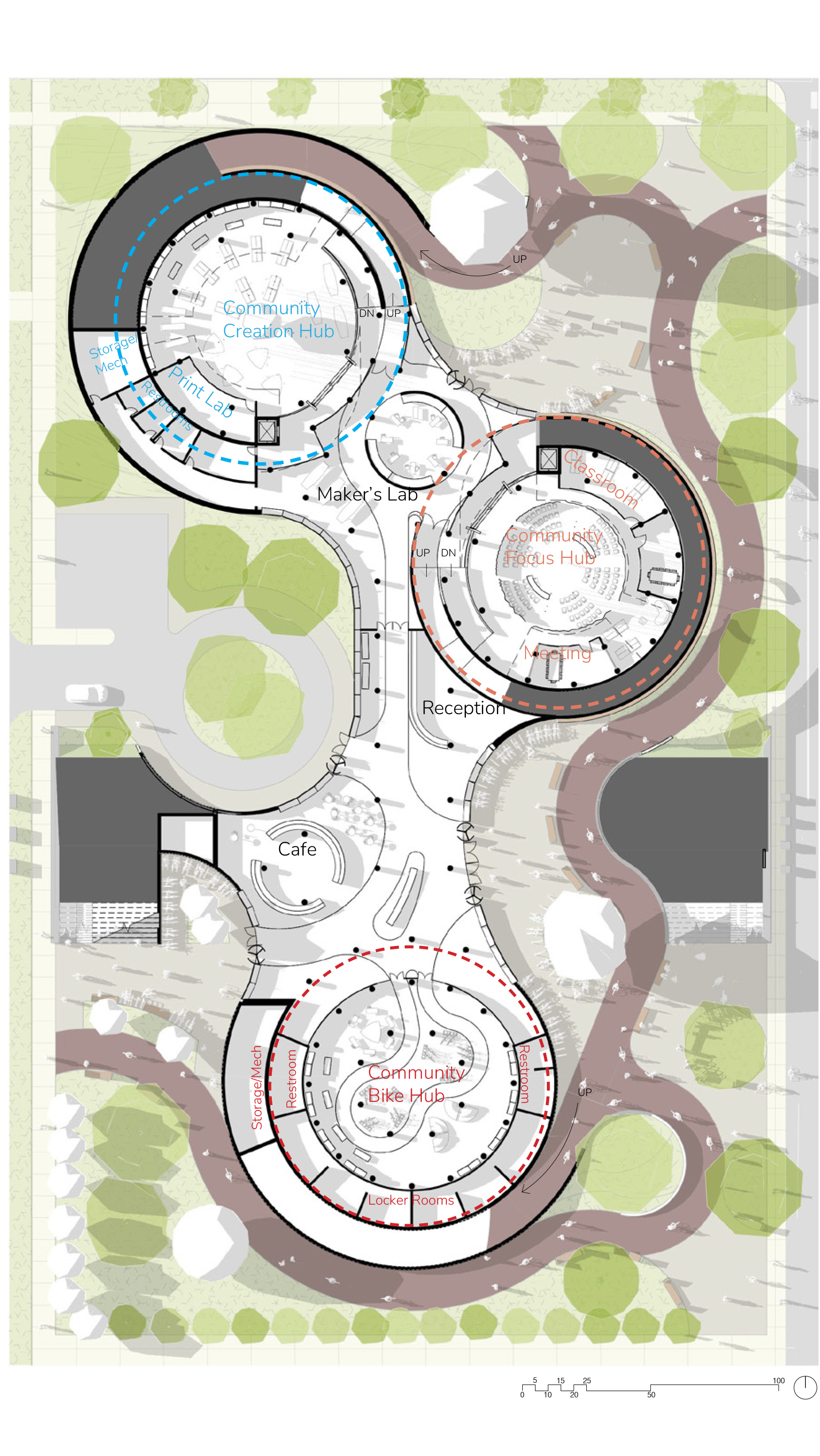
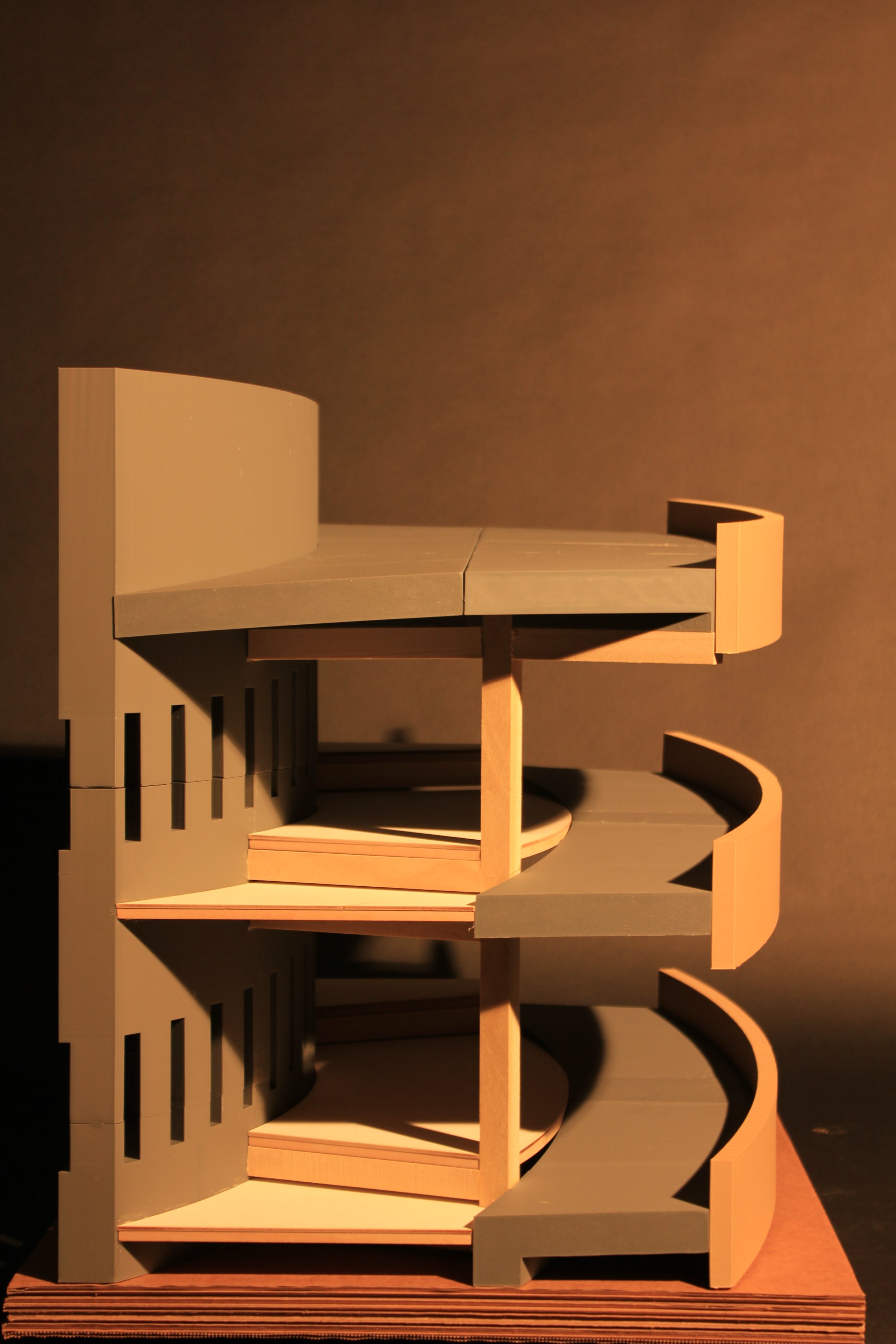
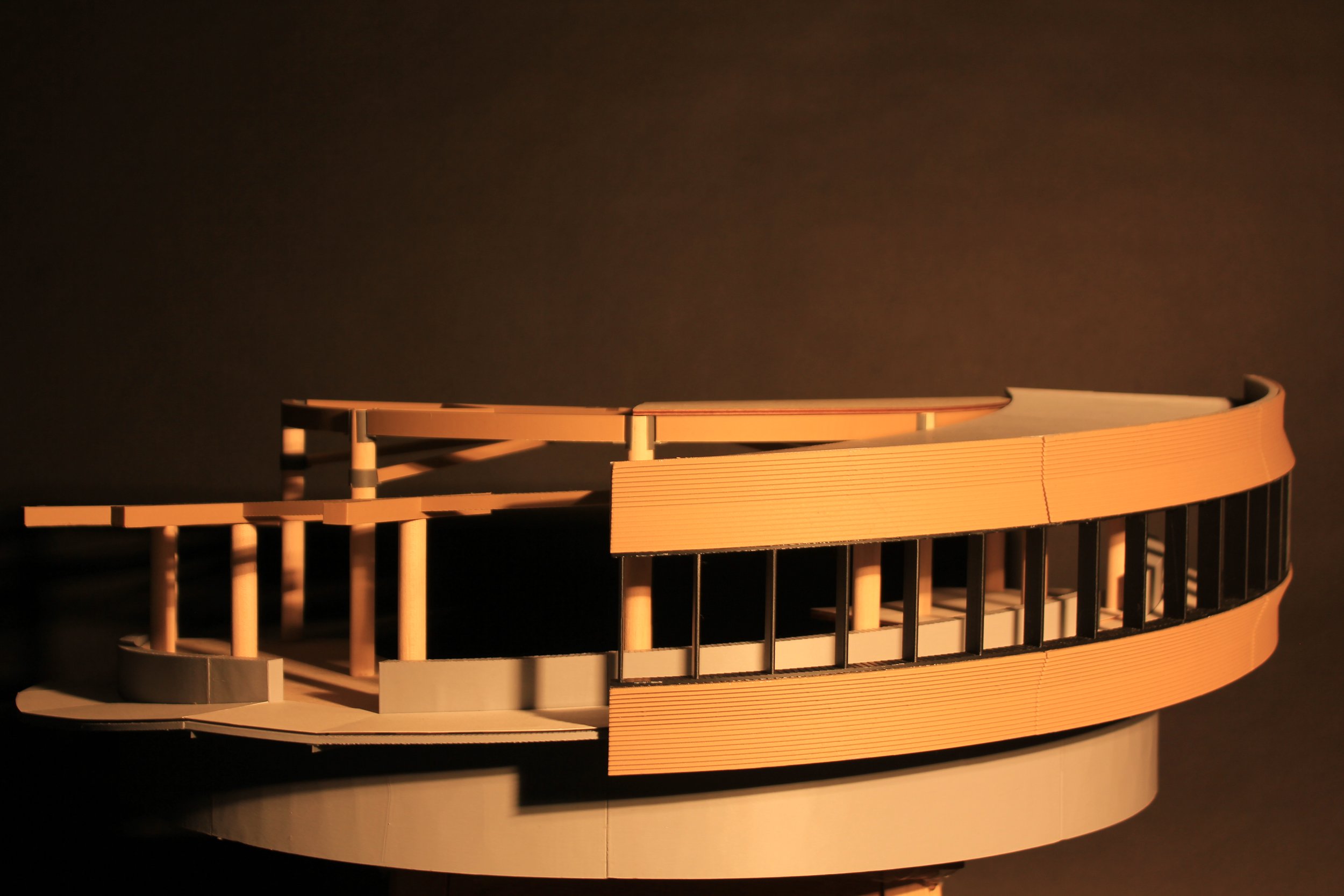
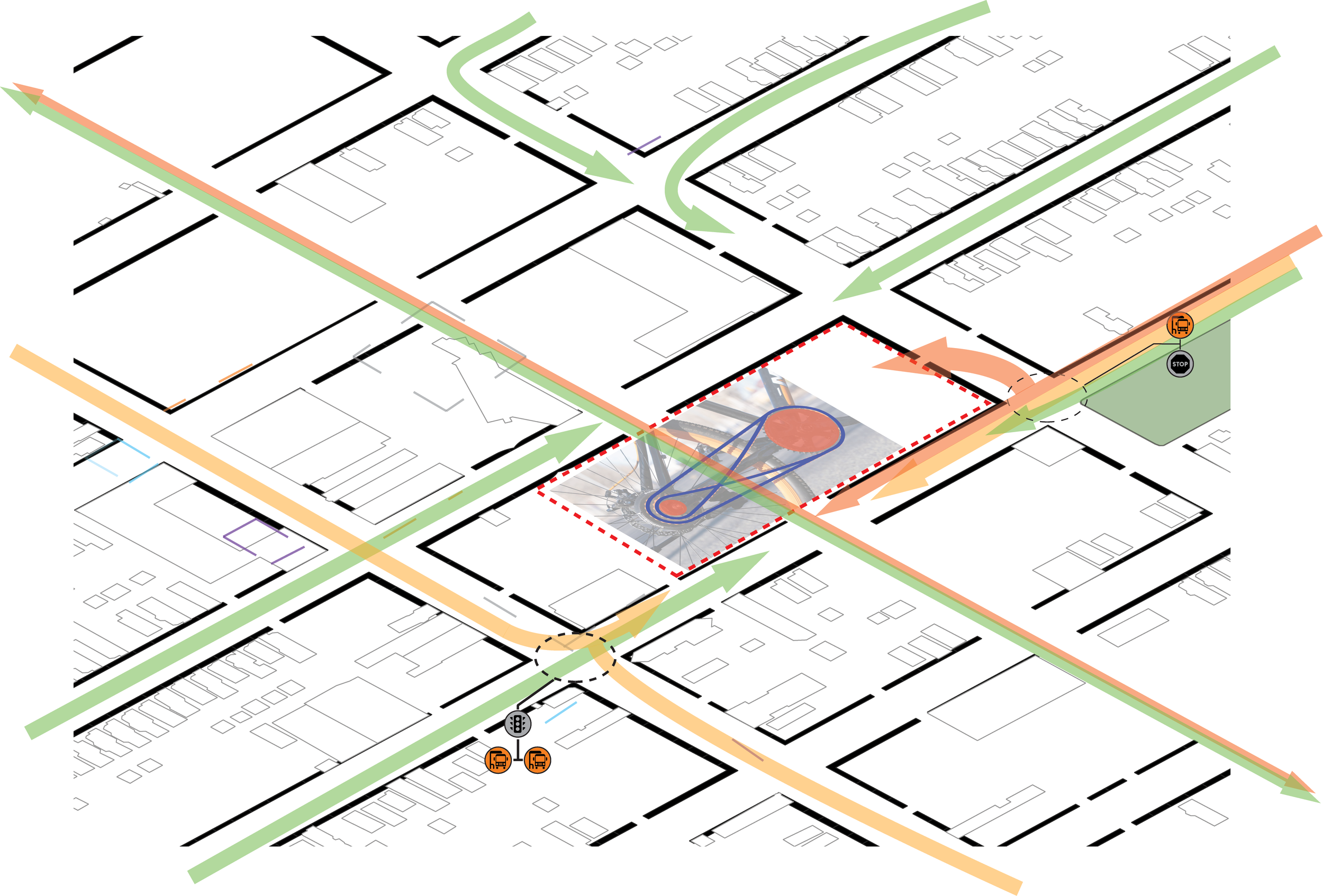
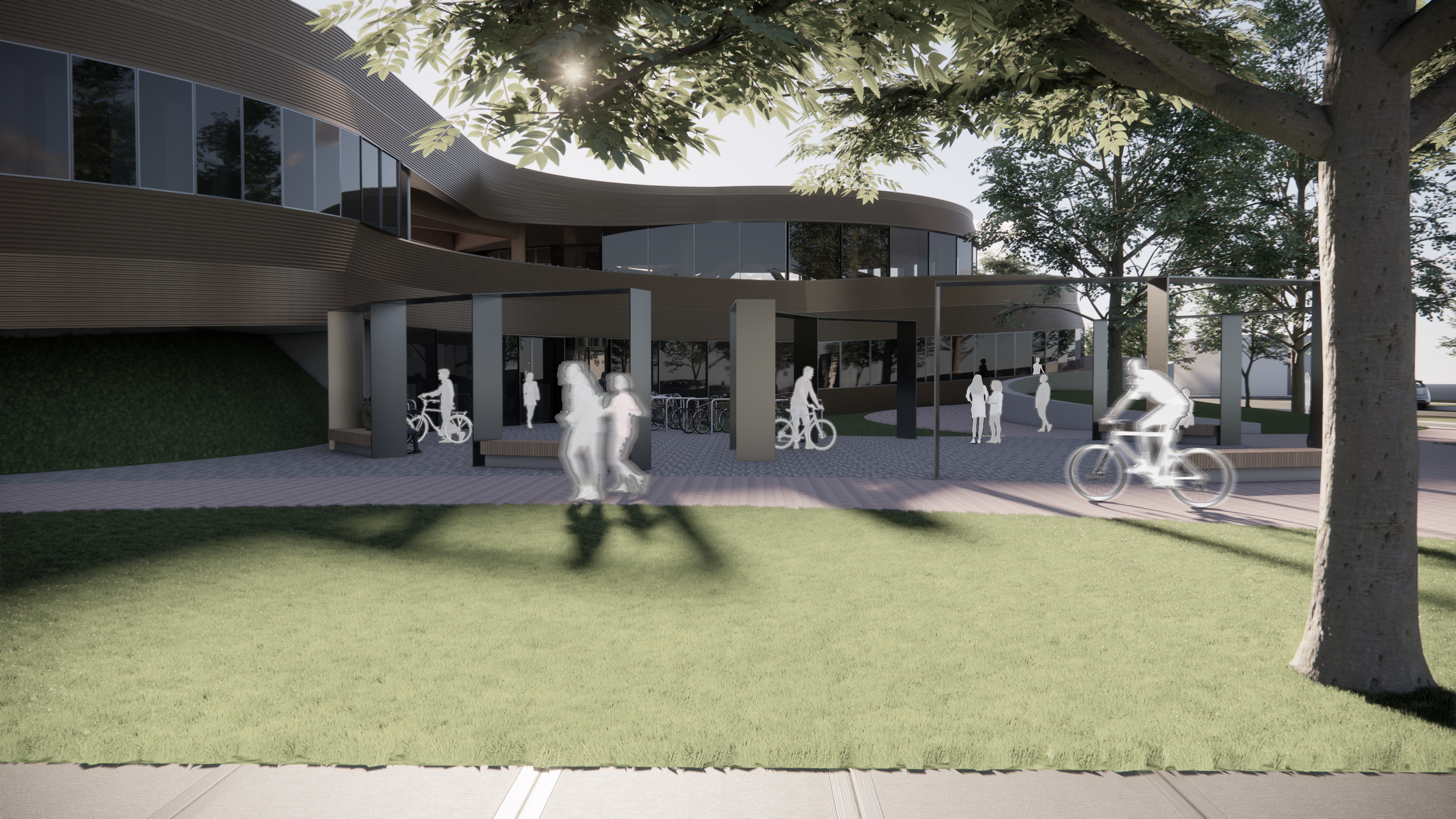
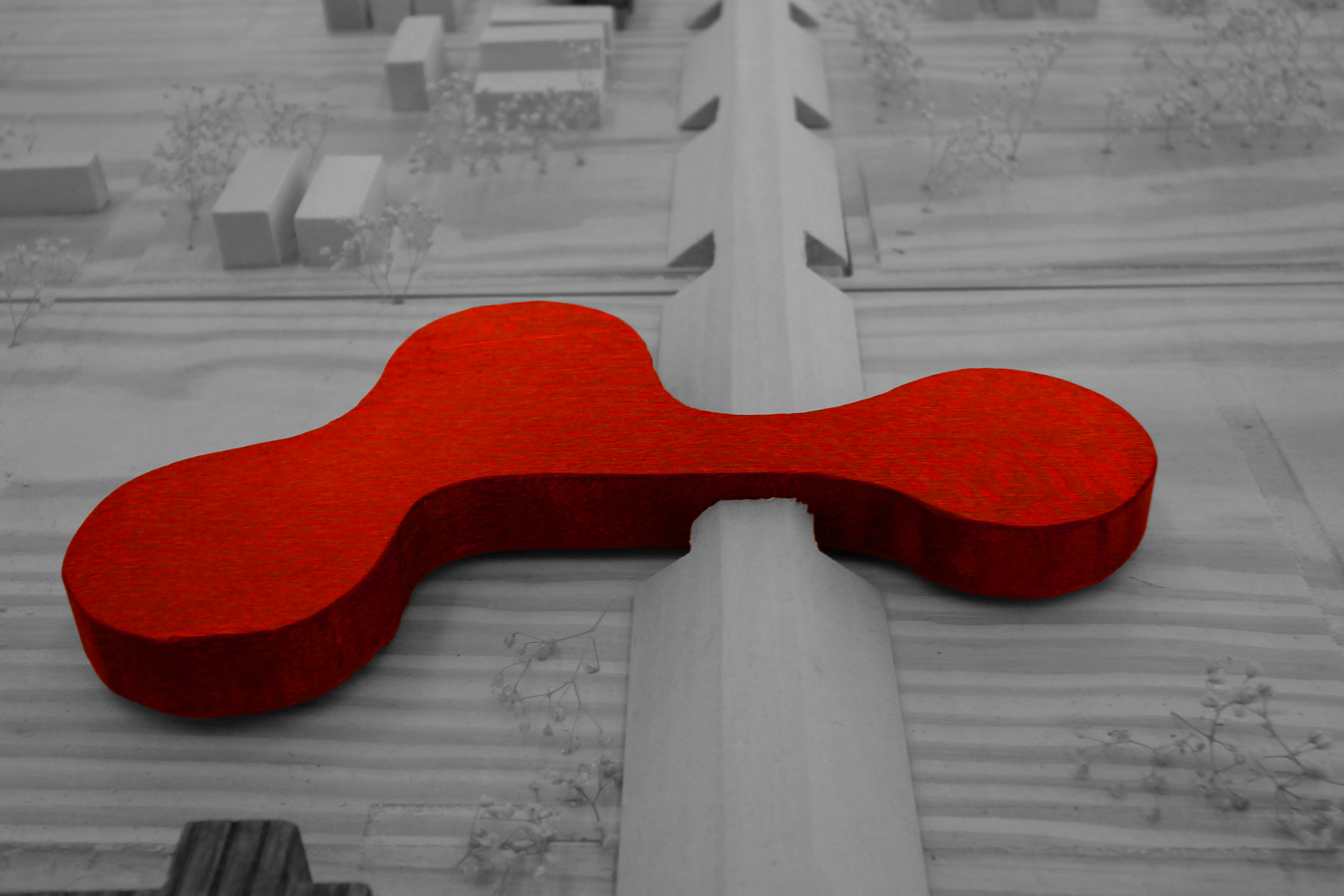
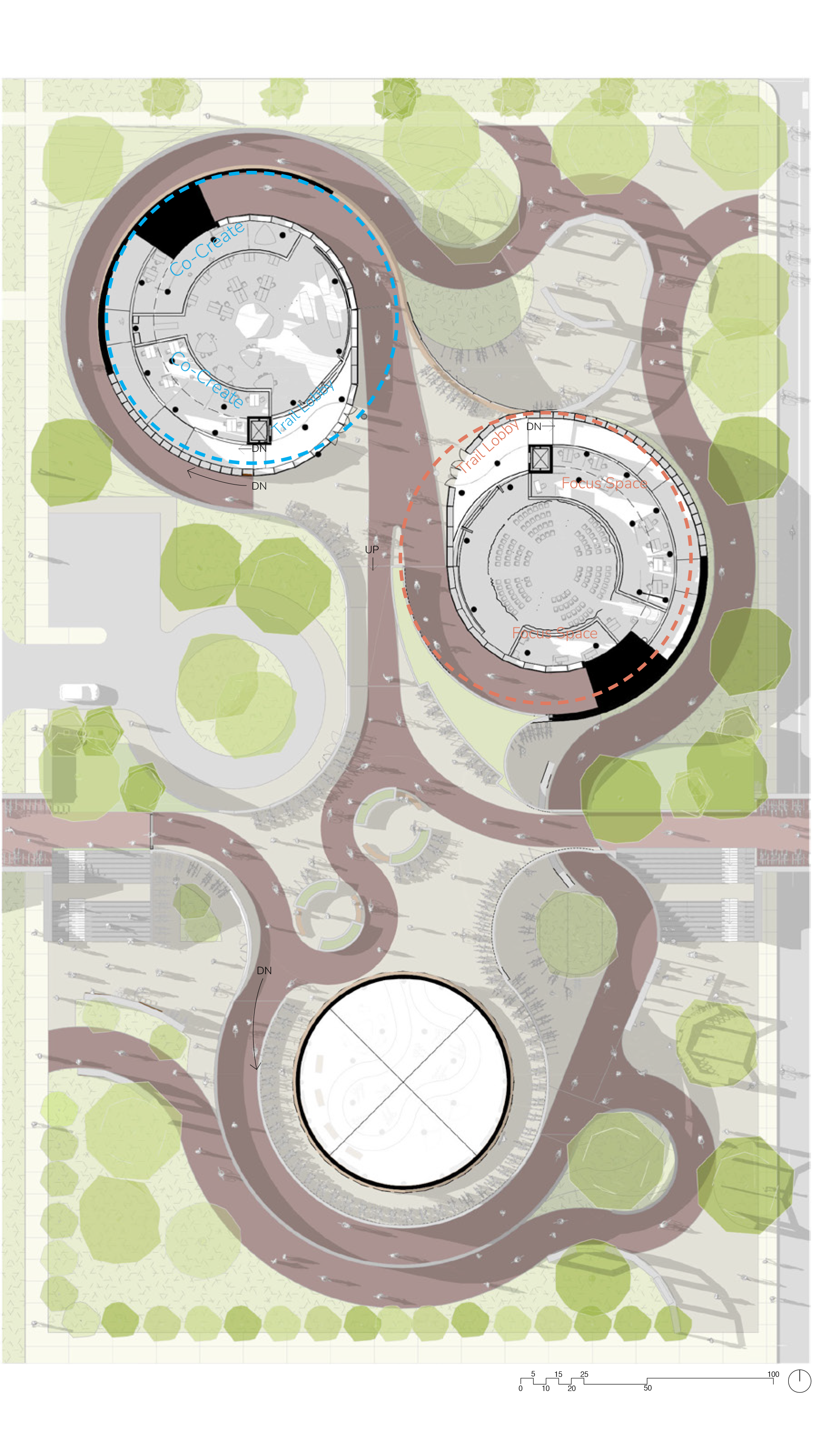
The Bike Hub’s design concept draws inspiration from the mechanics of a bicycle. The program and circulation mimic the seamless motion of a bike chain winding through its gears, while the structure reflects the intricate geometry of bike tires.
Pedestrian Highways
Chicago's 606 functions as a bicycle and pedestrian corridor, activating surrounding streets and encouraging everyday cycling. Englewood lacks a comparable network, leaving riders to navigate disconnected bike lanes and busy streets. The proposed Englewood Trail has the potential to become a similar community spine, improving access while making cycling a safer and more practical transportation option.
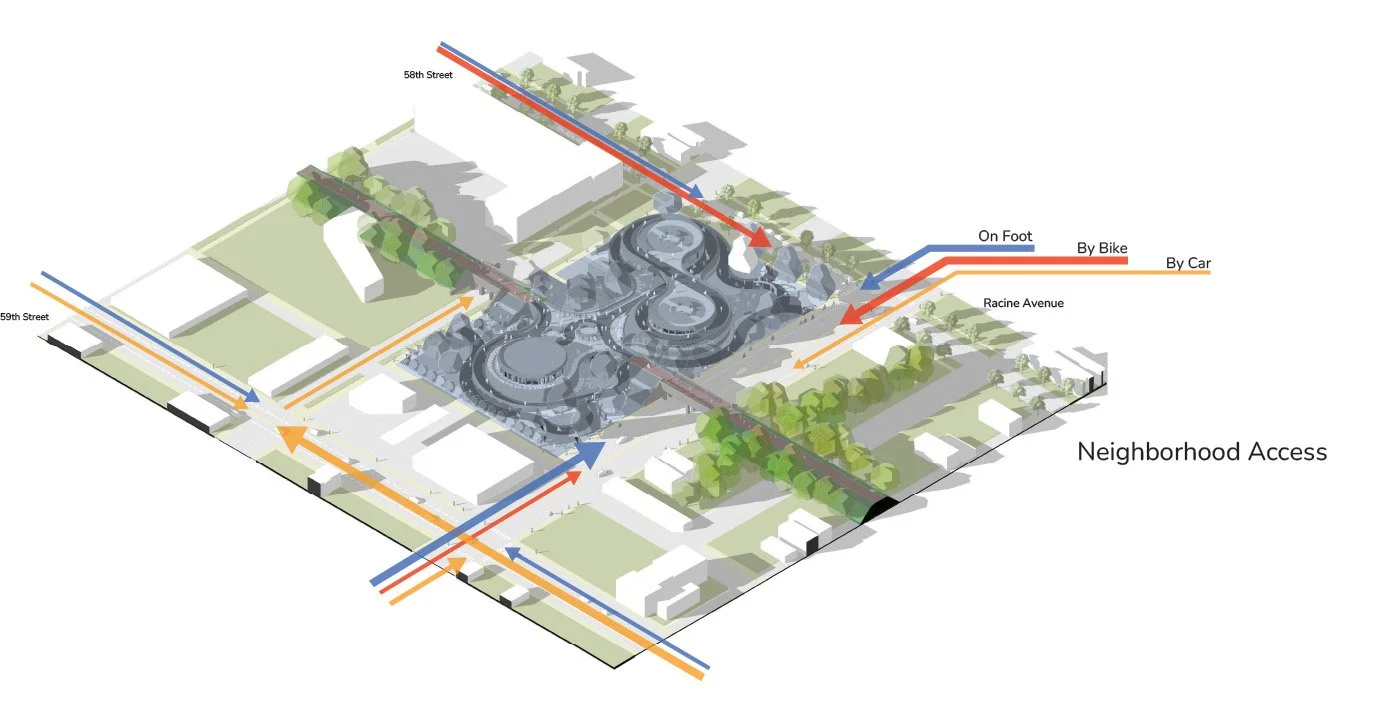
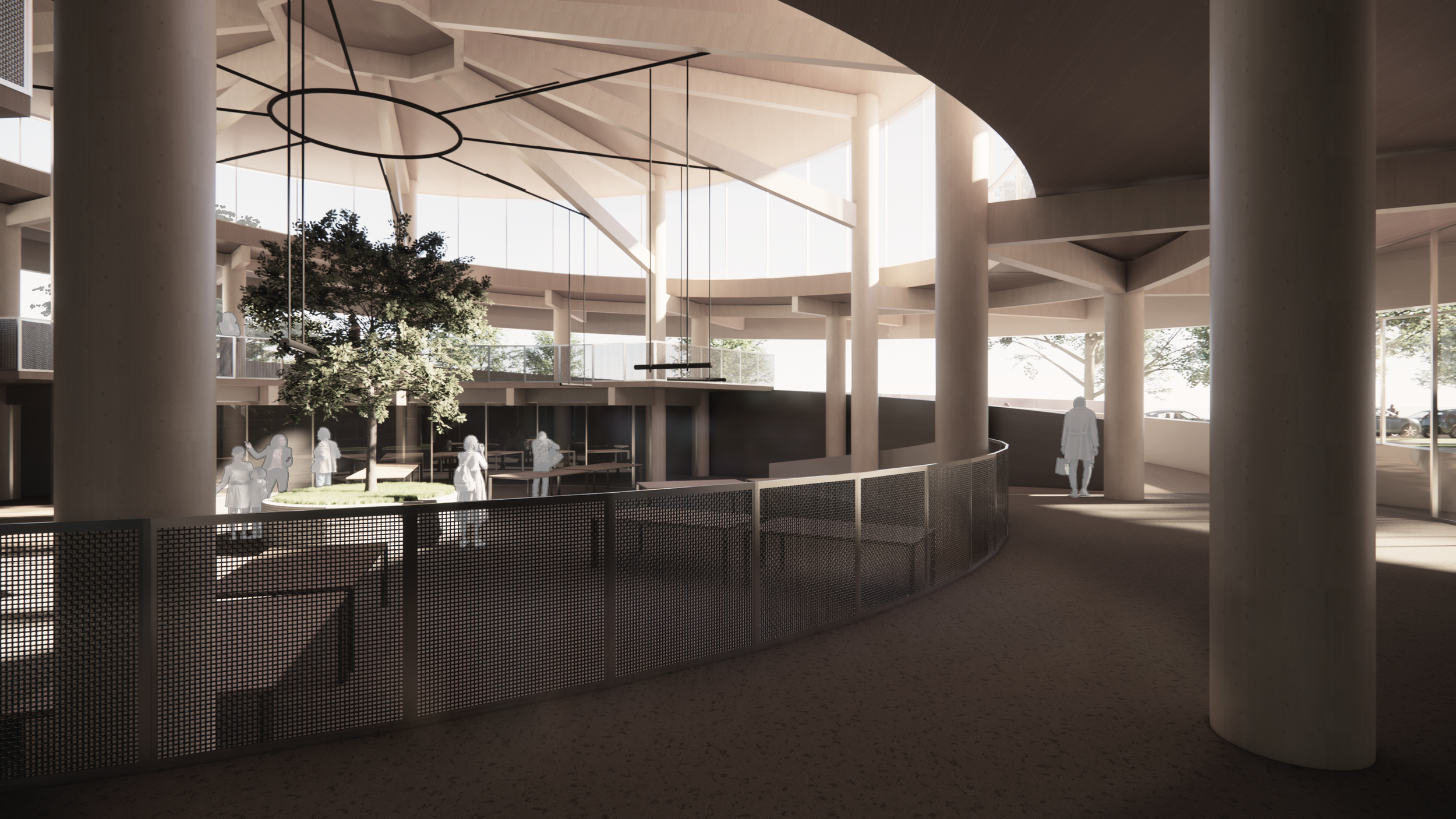
Each Hub contains a range of program to support and facilitate the needs of the community now and into the future.
Creation Hub: The Creation Hub offers an open studio space where residents and visitors can create and collaborate, with access to a Print Lab, shared supplies, and personal storage on the ground level. Mezzanine platforms above provide flexible private workspaces, separated by movable panels.
Gathering Hub: The Gathering Hub features a large multi-purpose space at its center, surrounded by meeting rooms and a classroom. Elevated platforms above offer quiet areas, group workspaces, and access to computers.
Bike Hub: The Bike Hub includes multiple Parts & Repair stations, allowing users to access shared tools, resources, and expertise. A small 3D print lab offers the ability to fabricate new parts and develop technological skills.
Systems
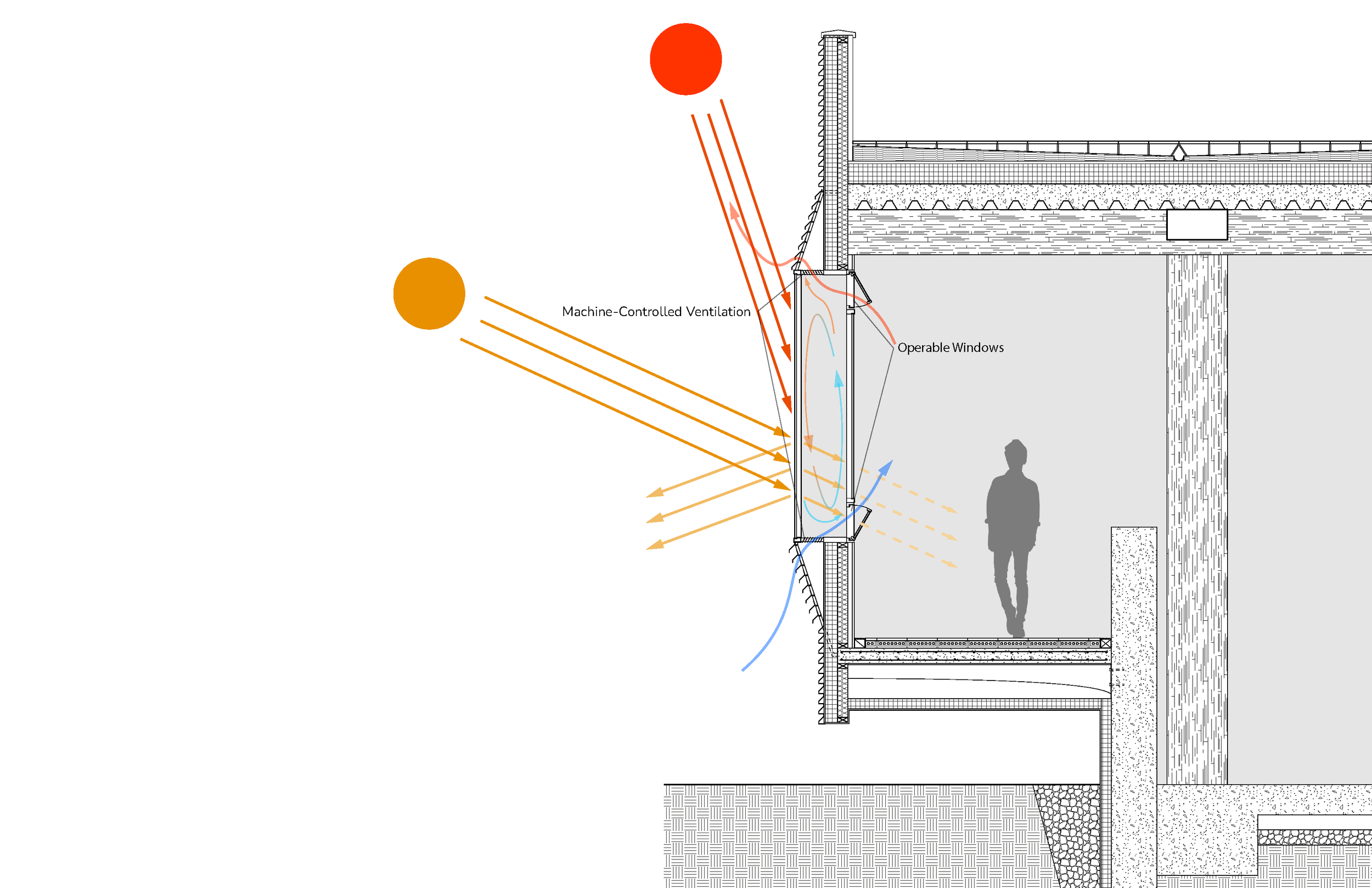
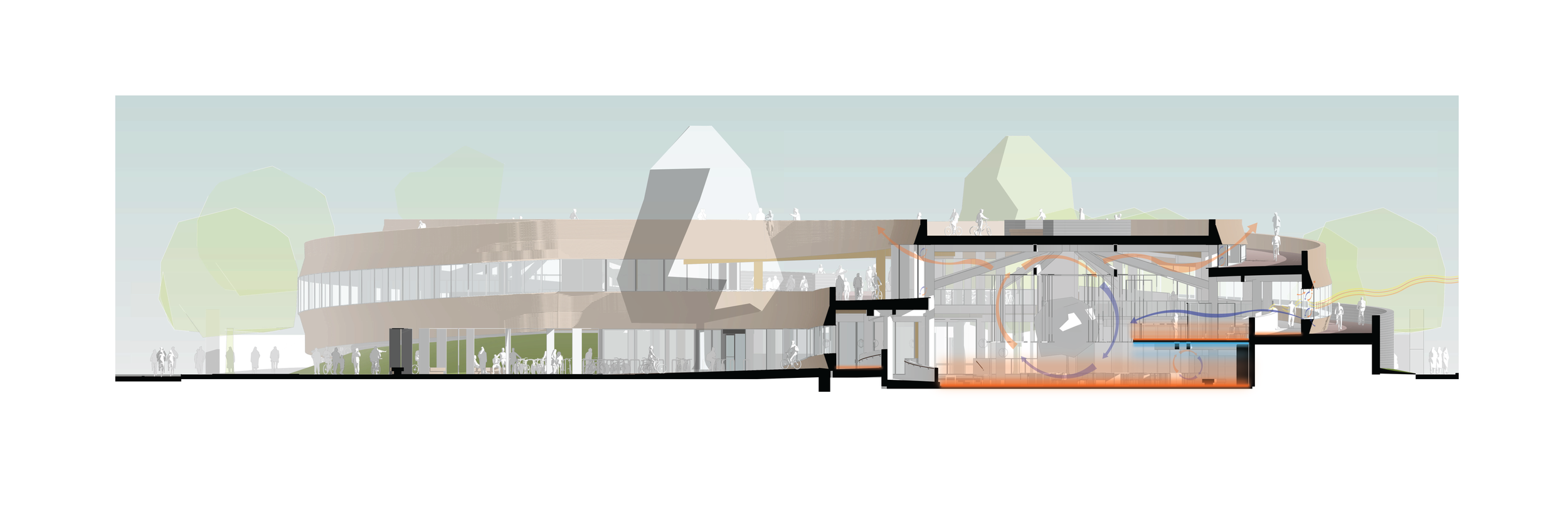
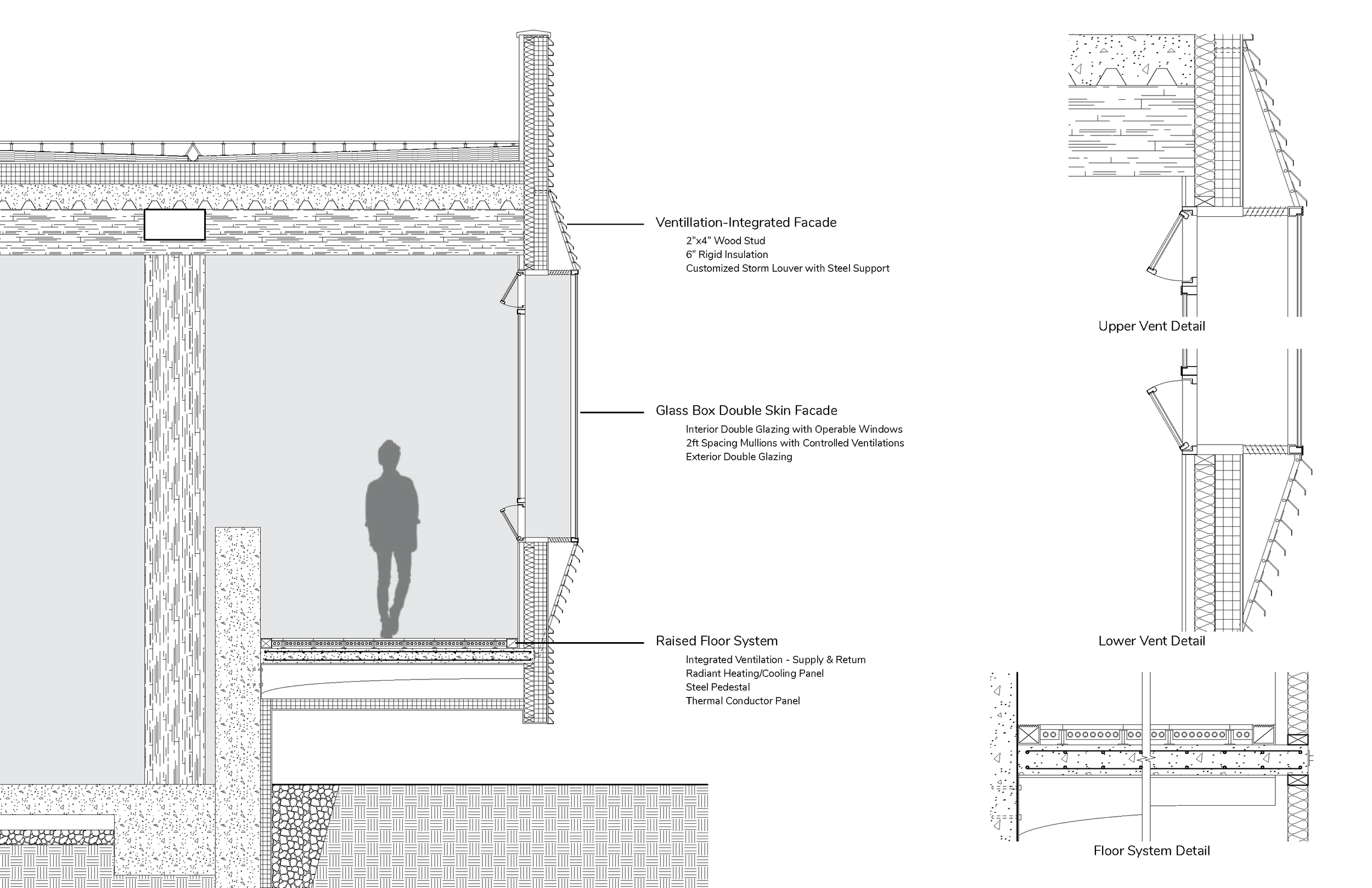
The Hubs take advantage of passive and active systems to achieve optimal occupant comfort. Radiant heating is used throughout to provide even distribution of heat and promote convection currents in the cooler months, while the box windows promote stack effect by allowing warm air to vent out and drawing in fresh air.